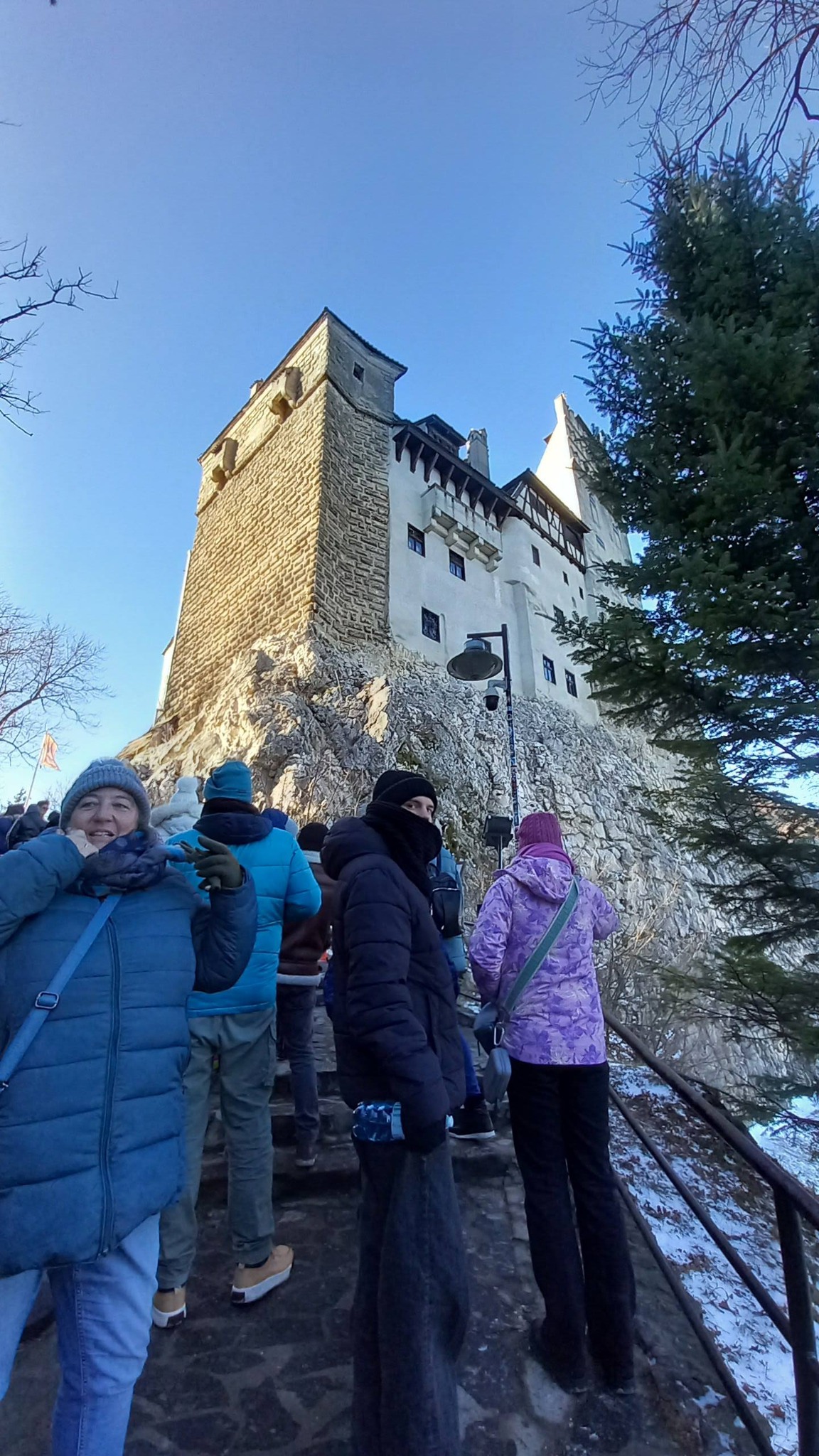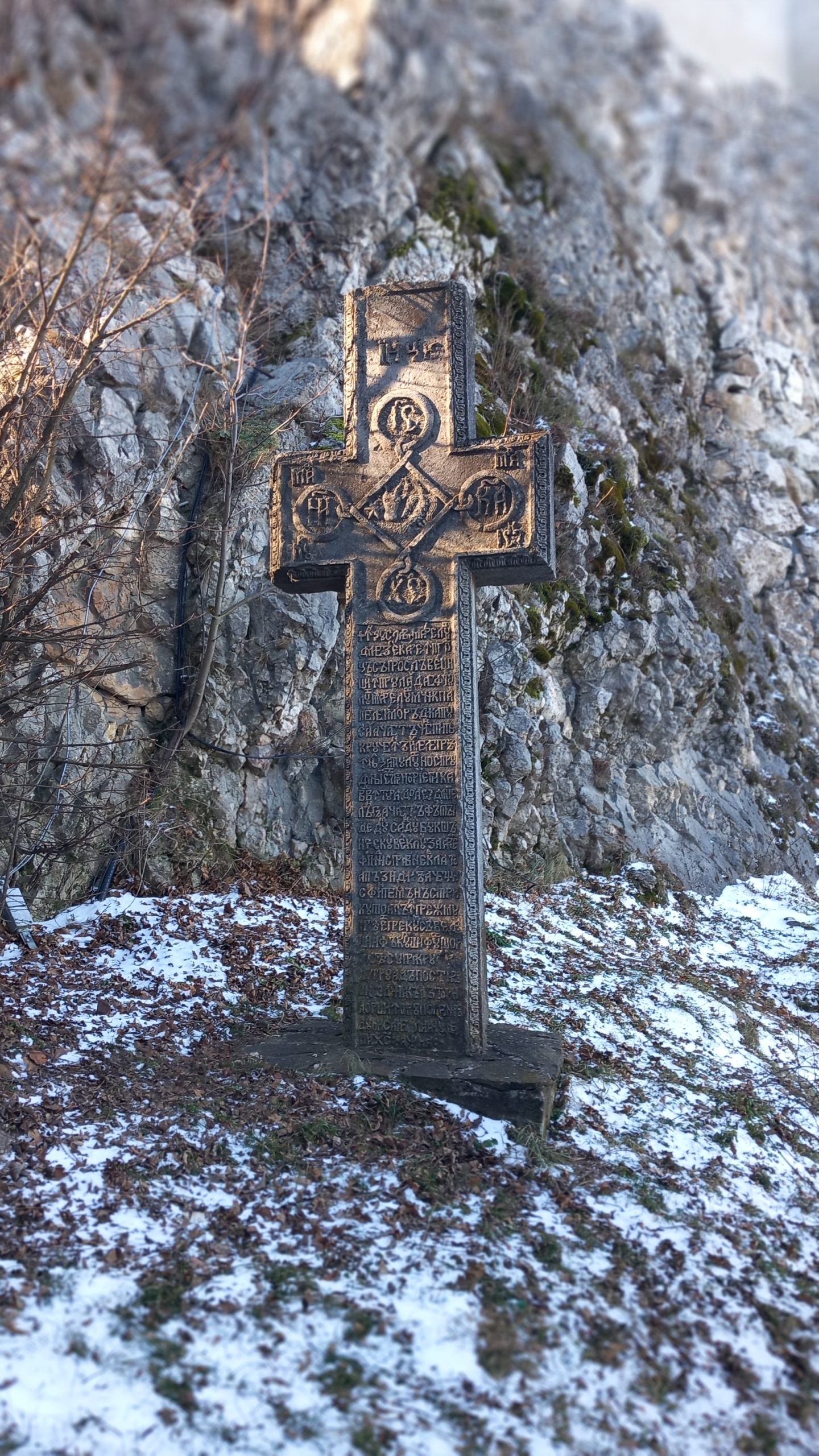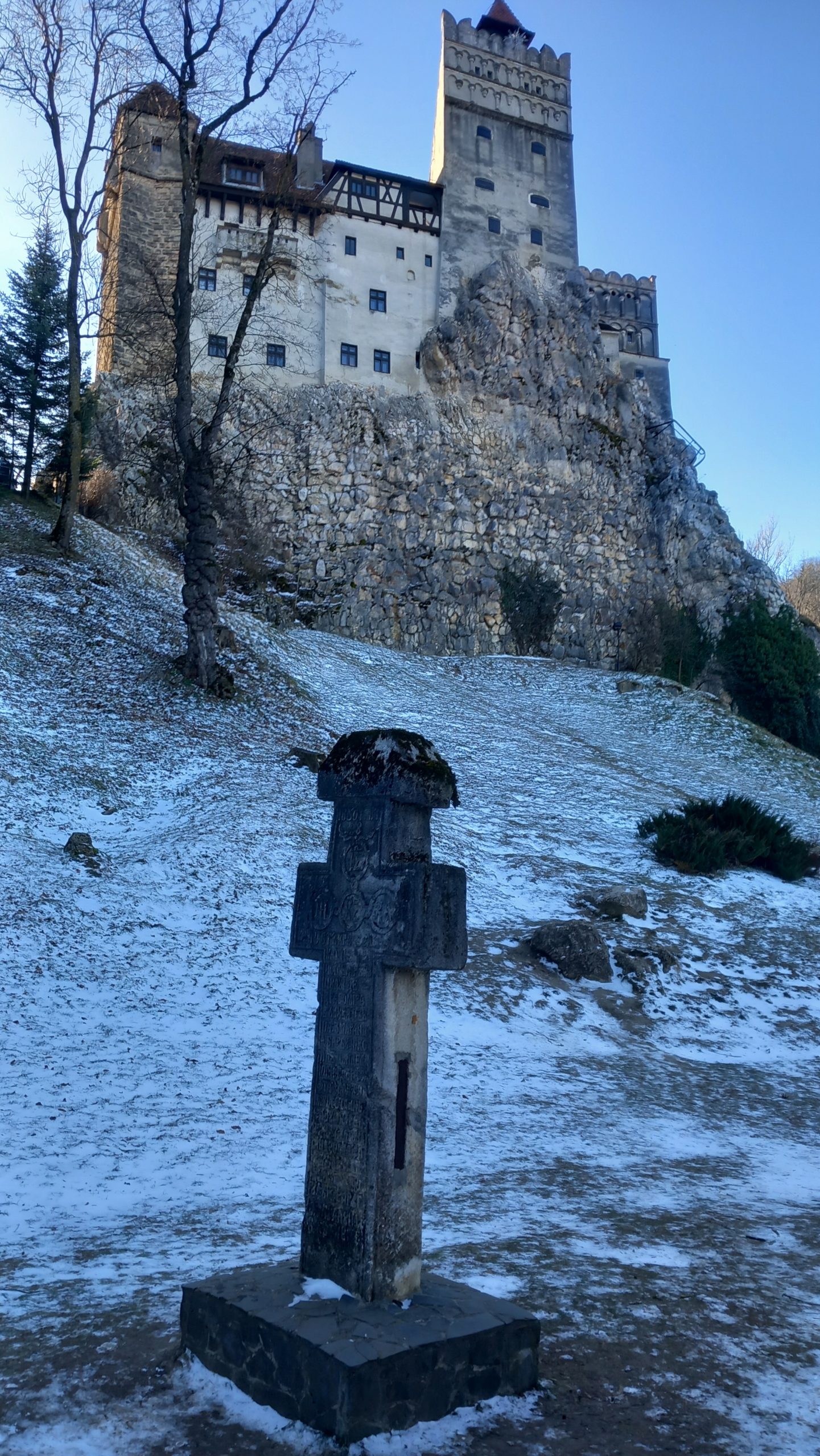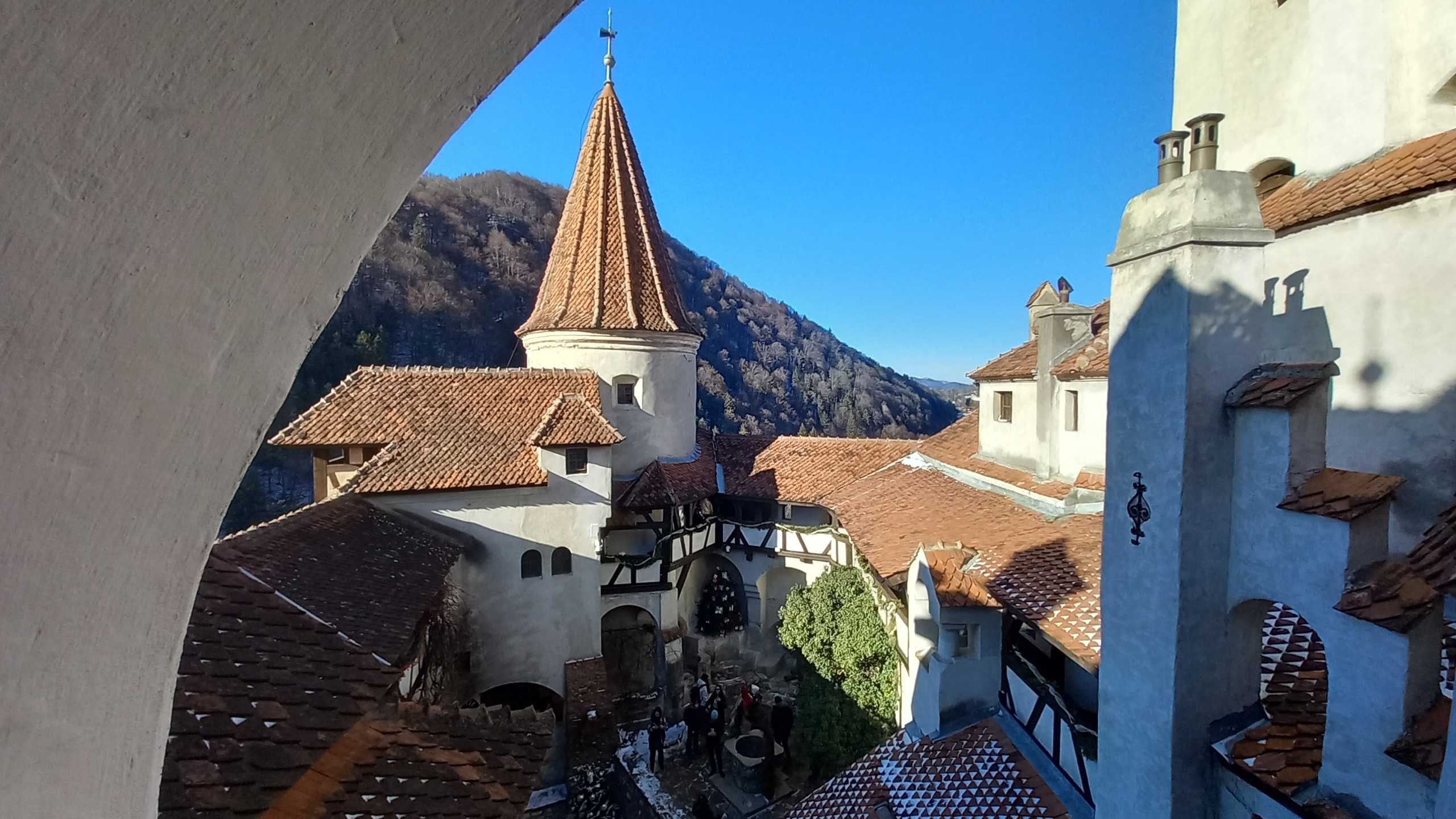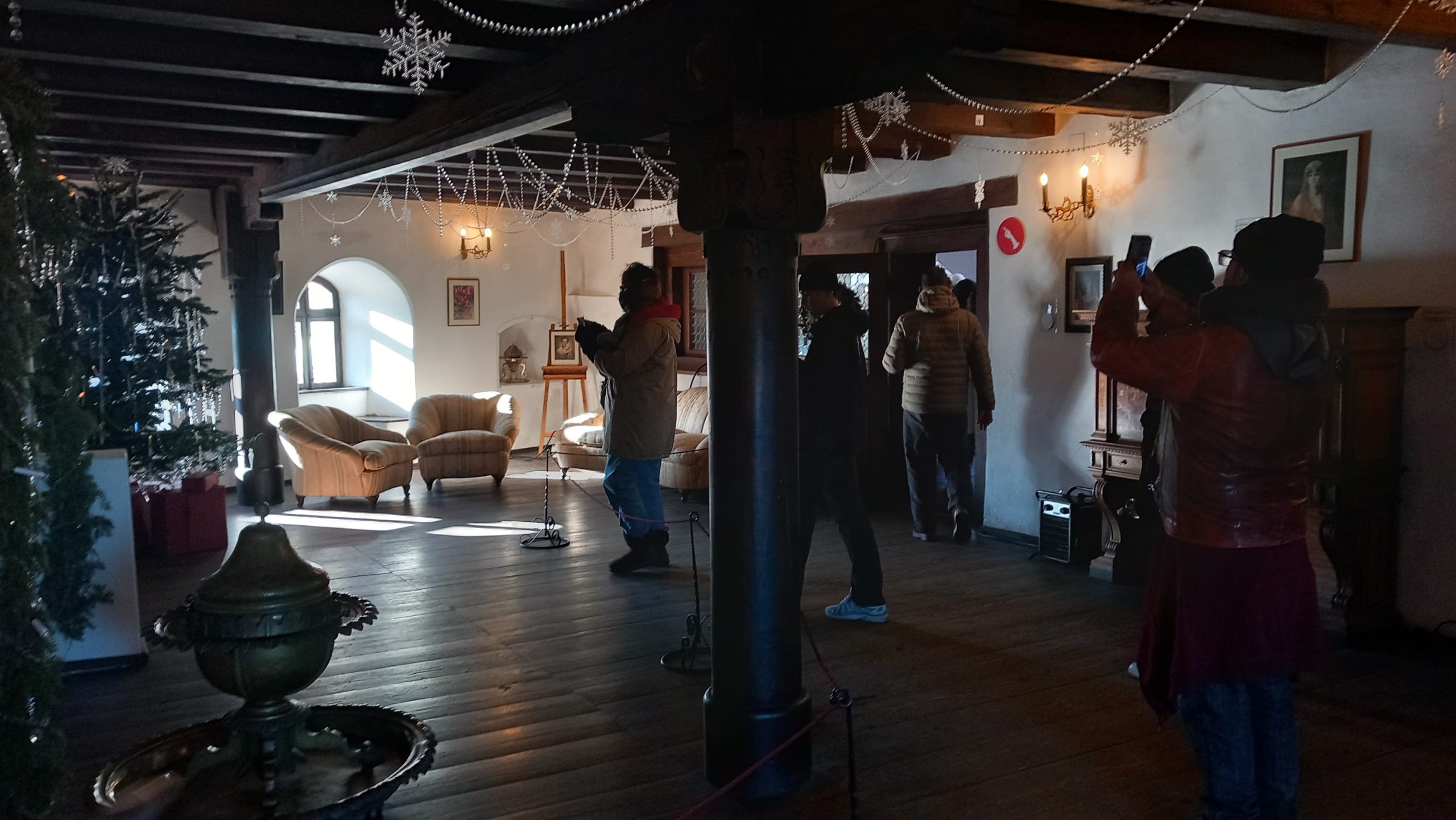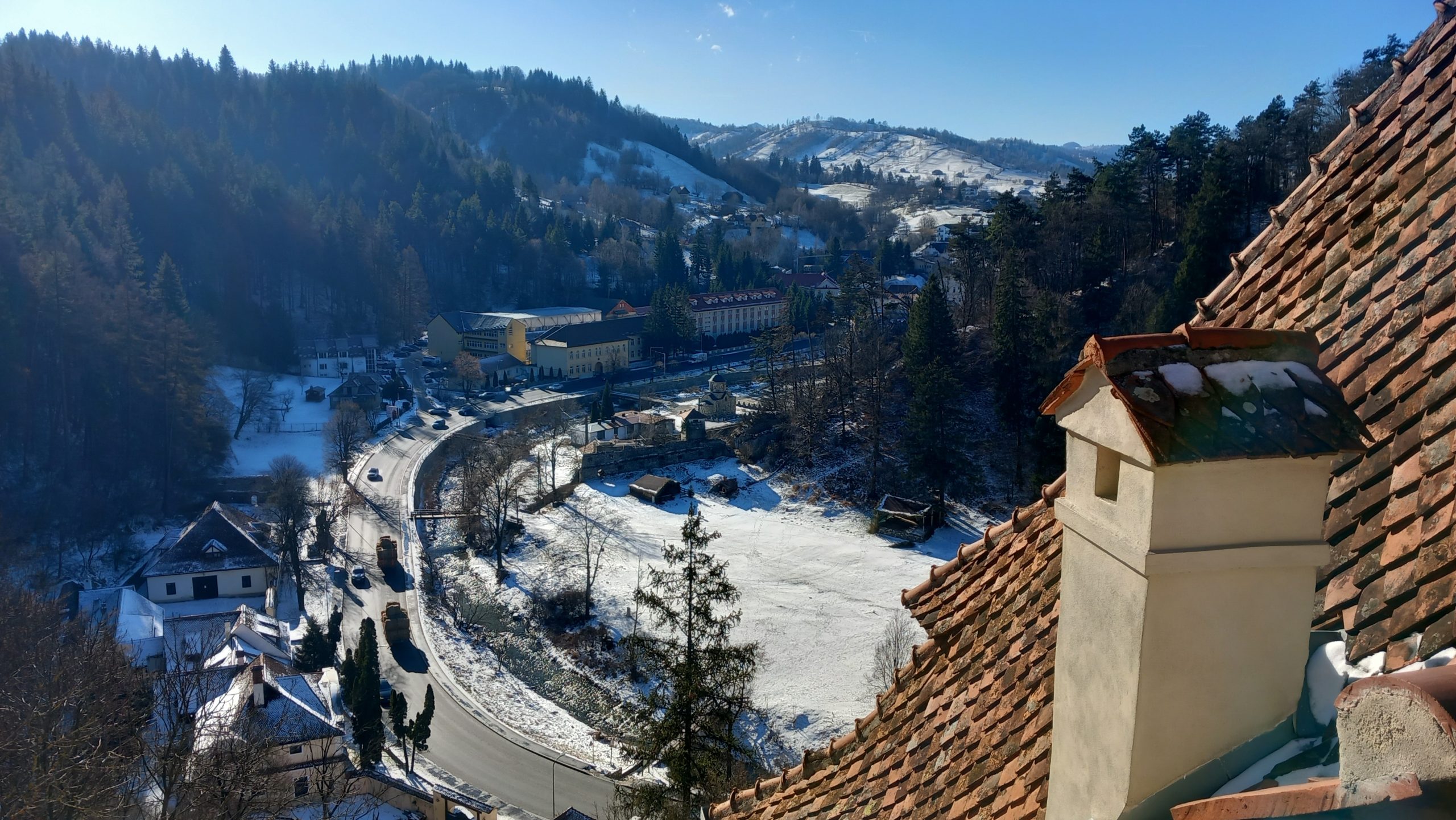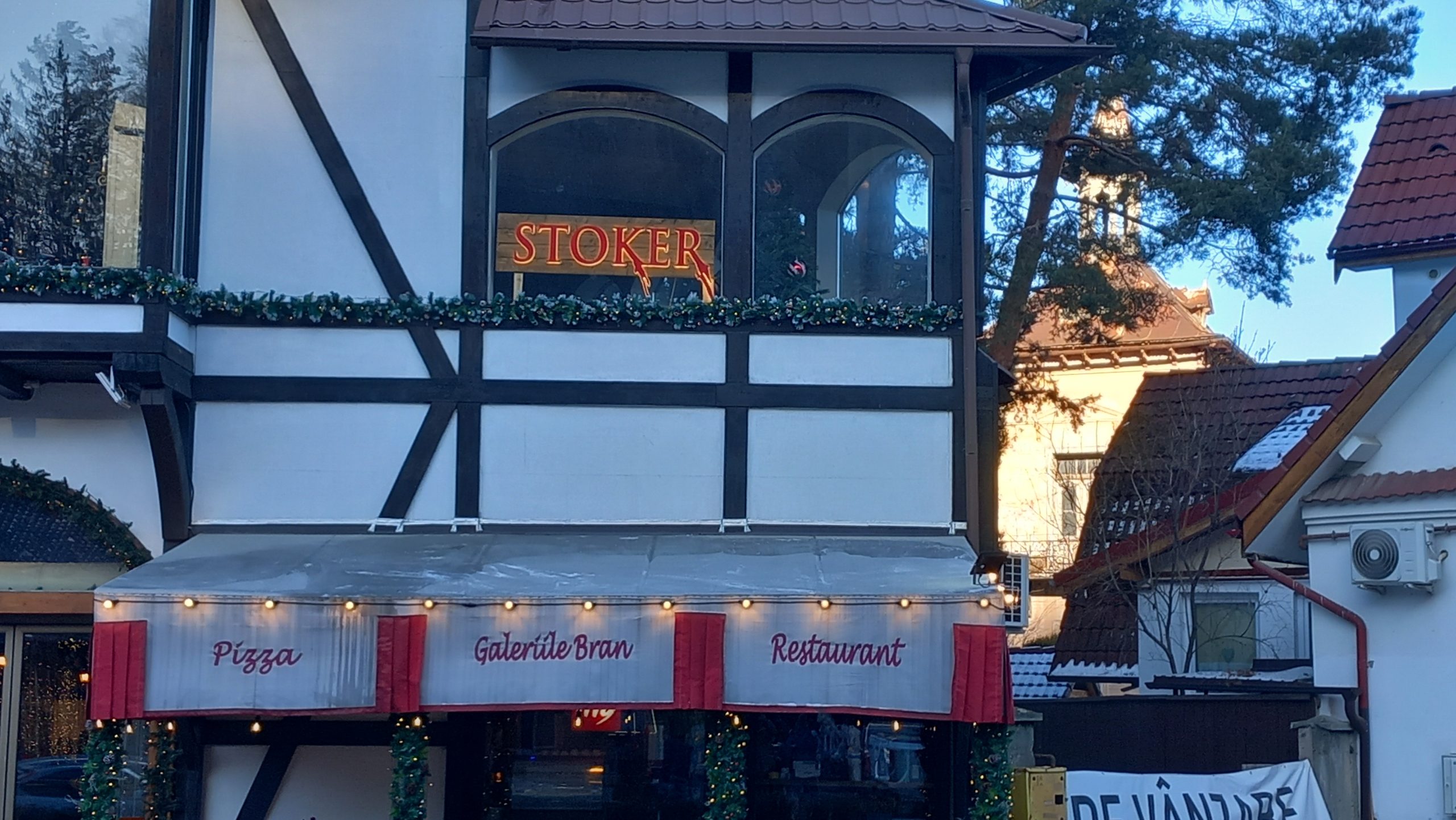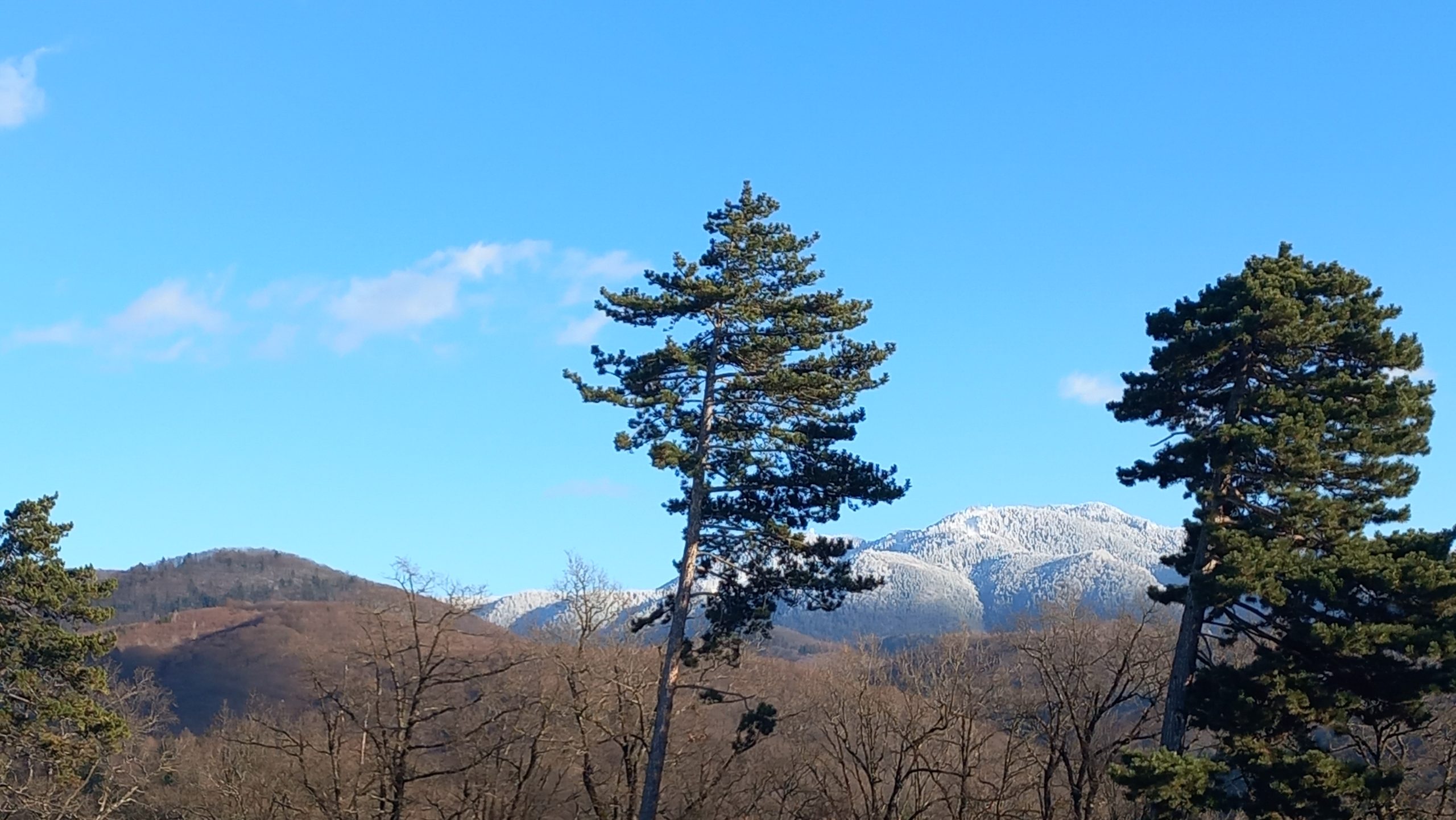
We kept on ascending, with occasional periods of quick descent, but in the main always ascending. Suddenly, I became conscious of the fact that the driver was in the act of pulling up the horses in the courtyard of a vast ruined castle, from whose tall black windows came no ray of light, and whose broken battlements showed a jagged line against the sky. (Jonathan Harker’s Journal. Dracula. Chapter One.)
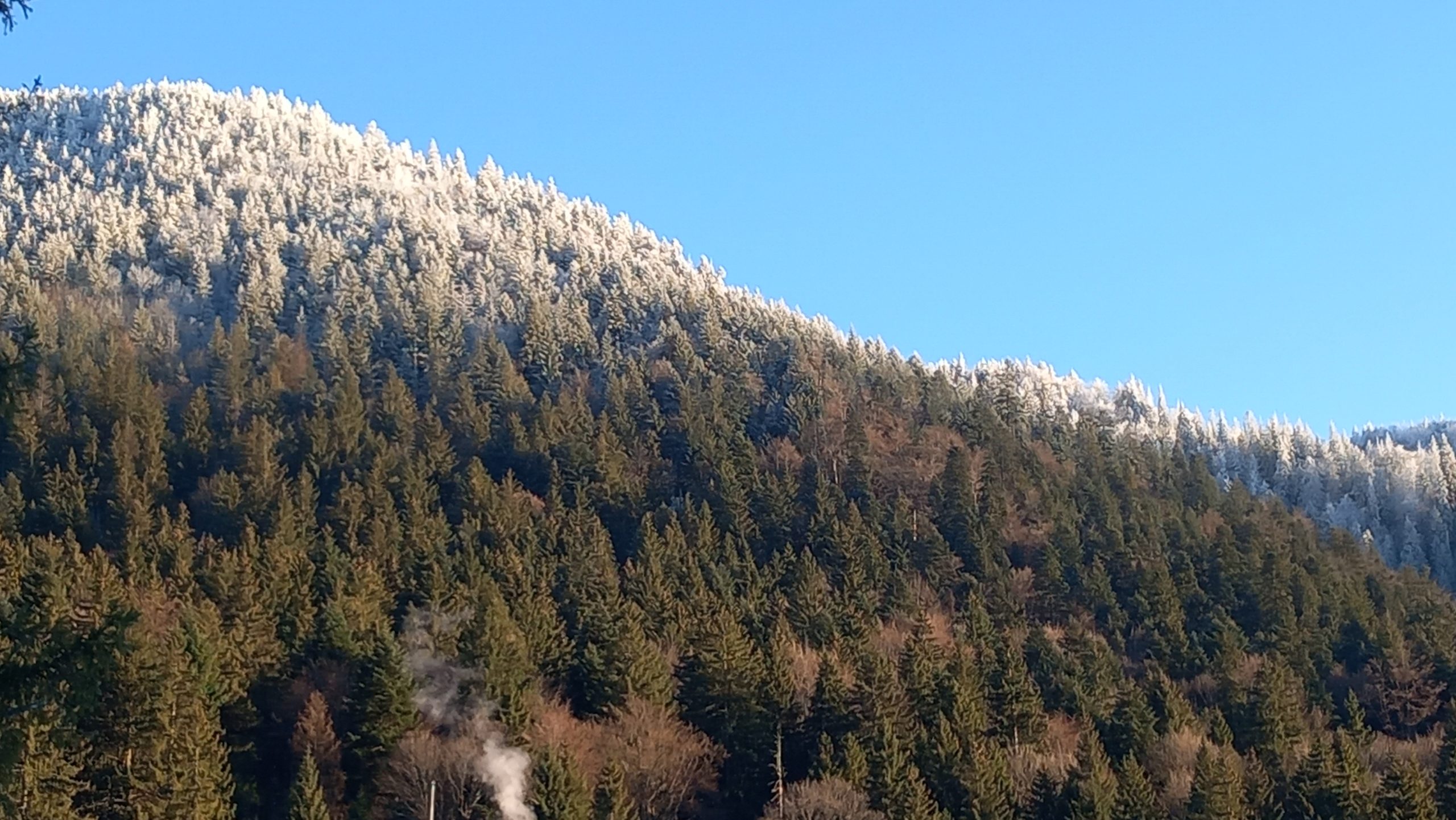
We kept on along flat roads cutting through a plain more industrial now than it had been twelve years before. Our driver took us from the main path towards Bran, cut through quiet villages, and out again along a road bordered by factories, with the Carpathian Mountains white-topped and forbidding behind. Our drive pulled up, eventually, outside the entrance to a carnival that was taking place beneath a restored Saxon stronghold, which stood only a few feet above the level of the ground.
Harker continues: The impression I had was of gloomy grandeur. It was built of massive stone, and though the stones were greatly worn by time and weather, the general effect was one of barbaric splendour. There was no sign of a bell or knocker…
What there was, however, was a queue of people ten deep and a hundred yards thick, all waiting for the opening time of midday. Aware that we would be waiting in line for at least an hour just to reach the ticket gate (and about the same again on the slope to the castle itself), and as we had e-tickets, I suggested we wander down to the front of the queue to see where we should go when the time came. The others followed, and lo! Just as we were approaching the gates, the clock struck twelve and, honestly, Miss, we were taken along with the crowd, and were through them gates before you could say Stick that in your queue and stake it, Van Helsing. Mind you, we still had to join those who had gone before in a long line that snaked up the sloping path from the ticket booth to the knockerless front door.
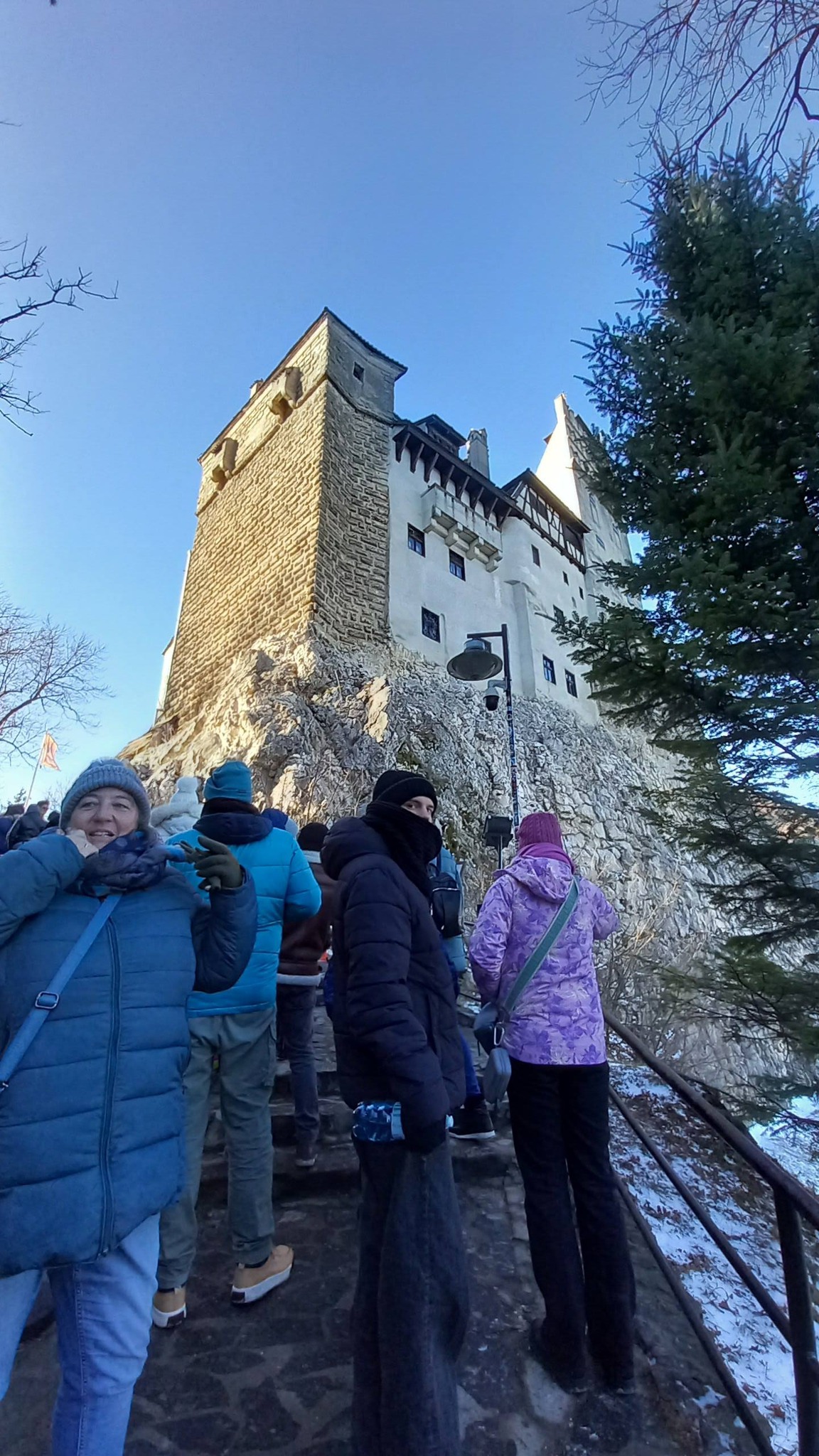
On our last visit, Neil and I had wandered into the Dracula-Land beneath the castle that thrives on tacky shops selling all things Vampire imported from China and nothing genuinely local, through, up and to the castle with no sign of a queue. We even had to open the front door ourselves.
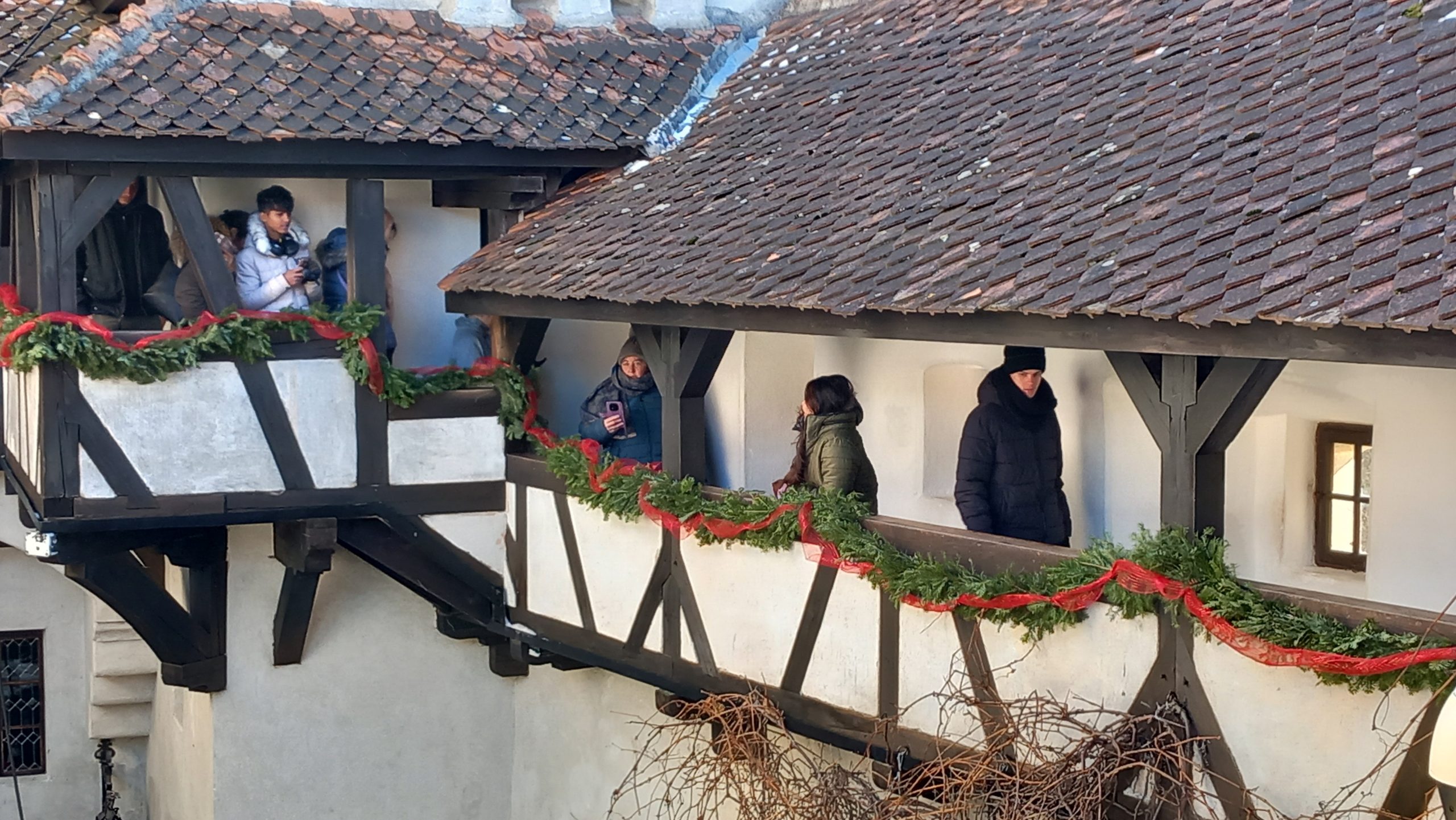
Clearly, the popularity of the thousands of unrelated legends that have grown up around this place and the original novel, is as strong now as it’s ever been. Admittedly, the castle did open three hours later than normal that day, and it was the holiday season, granted, so it was very busy, but once inside, as long as you followed the arrows, kept in line with the other sheep, and didn’t try to turn back, you got to see everything on offer. This now includes an exhibition of Romanian folklore wrapped up in exhibits and projections of ghosts and ghouls. Most fascinating was why a trio of ‘three little maids from school’ waited for so long simply to stand in a chamber containing a single coffin and each take fifteen photos of it before squealing away to photograph the Pricolici. (A Romanian werewolf legend.)
Those in the know know that Bran Castle has nothing to do with Bram Stoker, his character, Dracula, or even Vlad III ‘the Impaler’, who provided Stoker with some inspiration but who 99% probably never set foot in the place. It’s popularity now has all to do with the post-WWII Romanian Tourist Board who came up with the idea of marketing the place as Dracula’s Castle. Our guide told us that there is no regulation of ticket sales, i.e., no limit to the number of people who may visit at any one time, and, as the queue to enter was even longer by the time we came out, I had to wonder how long it could continue to be a victim of its own success. How long until, dare I say it, something happens in that overcrowded building to draw the world’s attention?
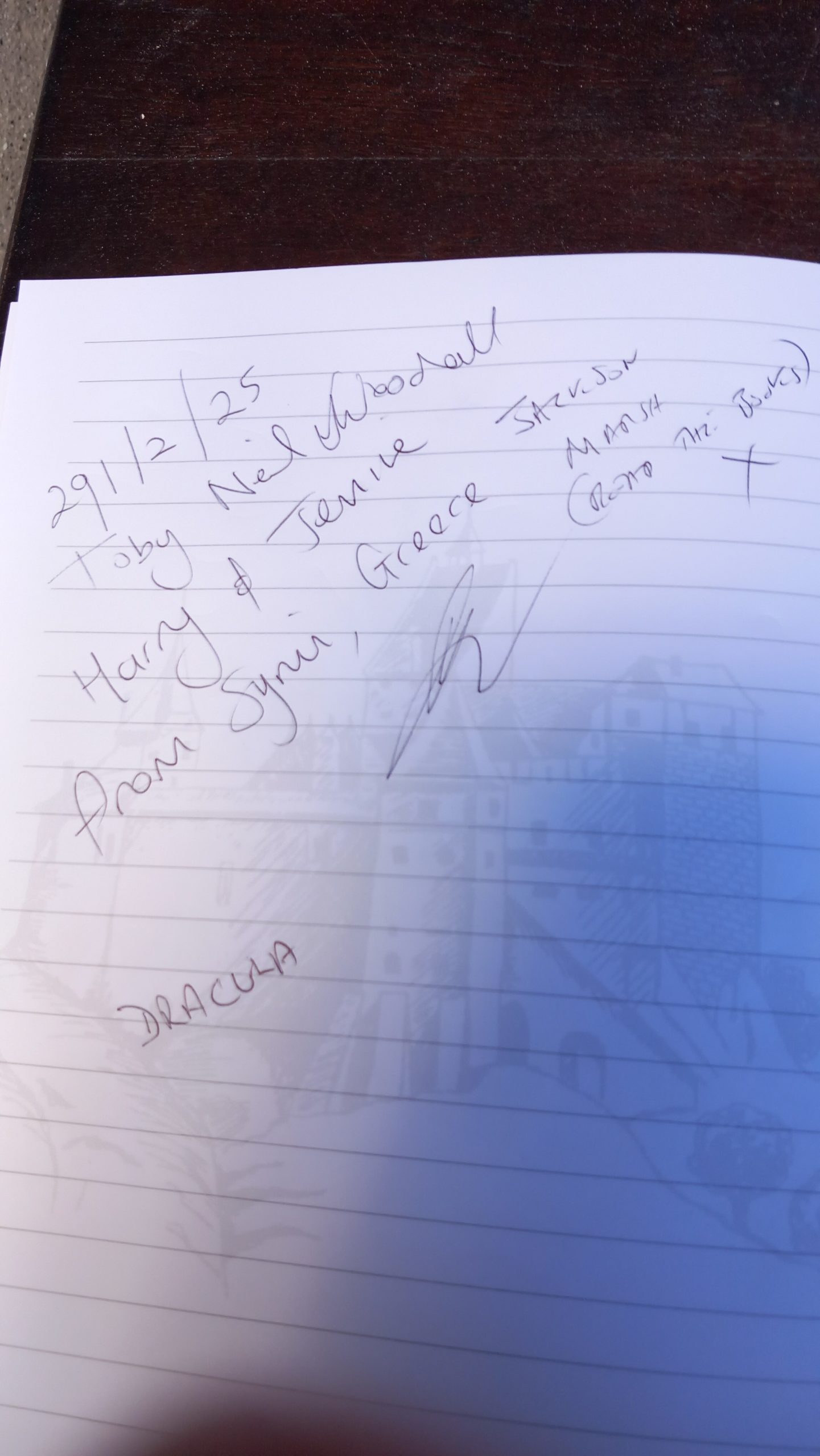
After a good look round, and after signing the visitors’ book, we traipsed off downhill to the additional seasonal attraction, the Medieval Village. This, I have to say, was more like it. Local artisans were producing arts and crafts right there in a massive tent. Blacksmith, leather worker, knights at practice, pottery, all interesting to watch, and the only place in the area, I suspect, where you could buy something actually made in Transylvania. It was atmospheric, and there were few people viewing. I expect they were still in the queue, where we would have been had not some unseen, supernatural force compelled us to sneak in at the front. Ahem.
And onwards, Driver!
That morning, our man for the day, Marco, had collected us in his very comfortable car (for full details of make, model, engine capacity, torque, etc., see Harry). He’d listened to what we wanted to do, taken us for a hearty, local, breakfast followed by a healthy, informative walk around the old Saxon walls of Brasov, driven us to Bran via the quiet route (all those back roads avoided the coaches and the traffic then jamming Bran town), waited for us to see the castle, and was now driving us off towards our next stop, Râșnov Fortress.
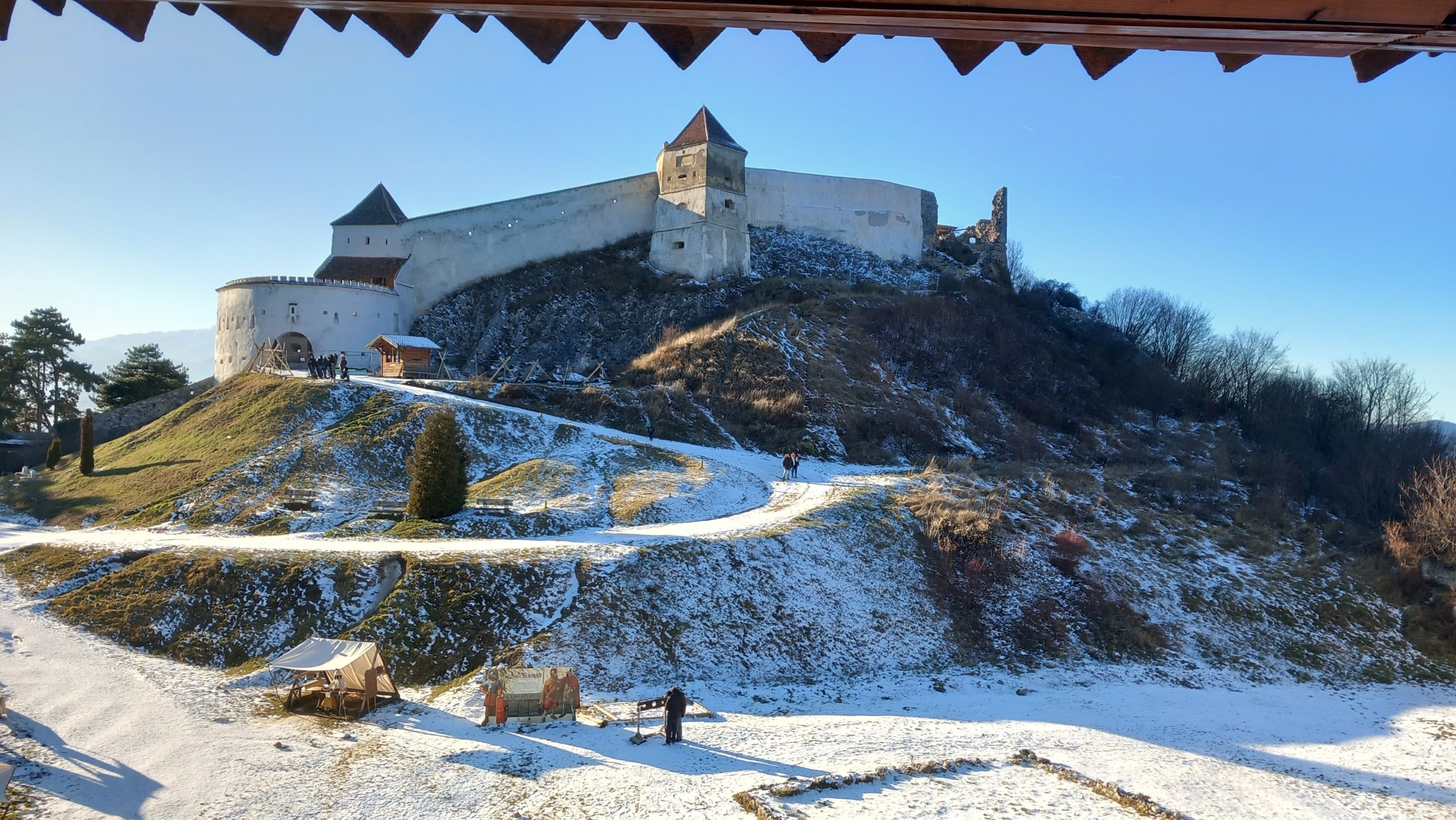
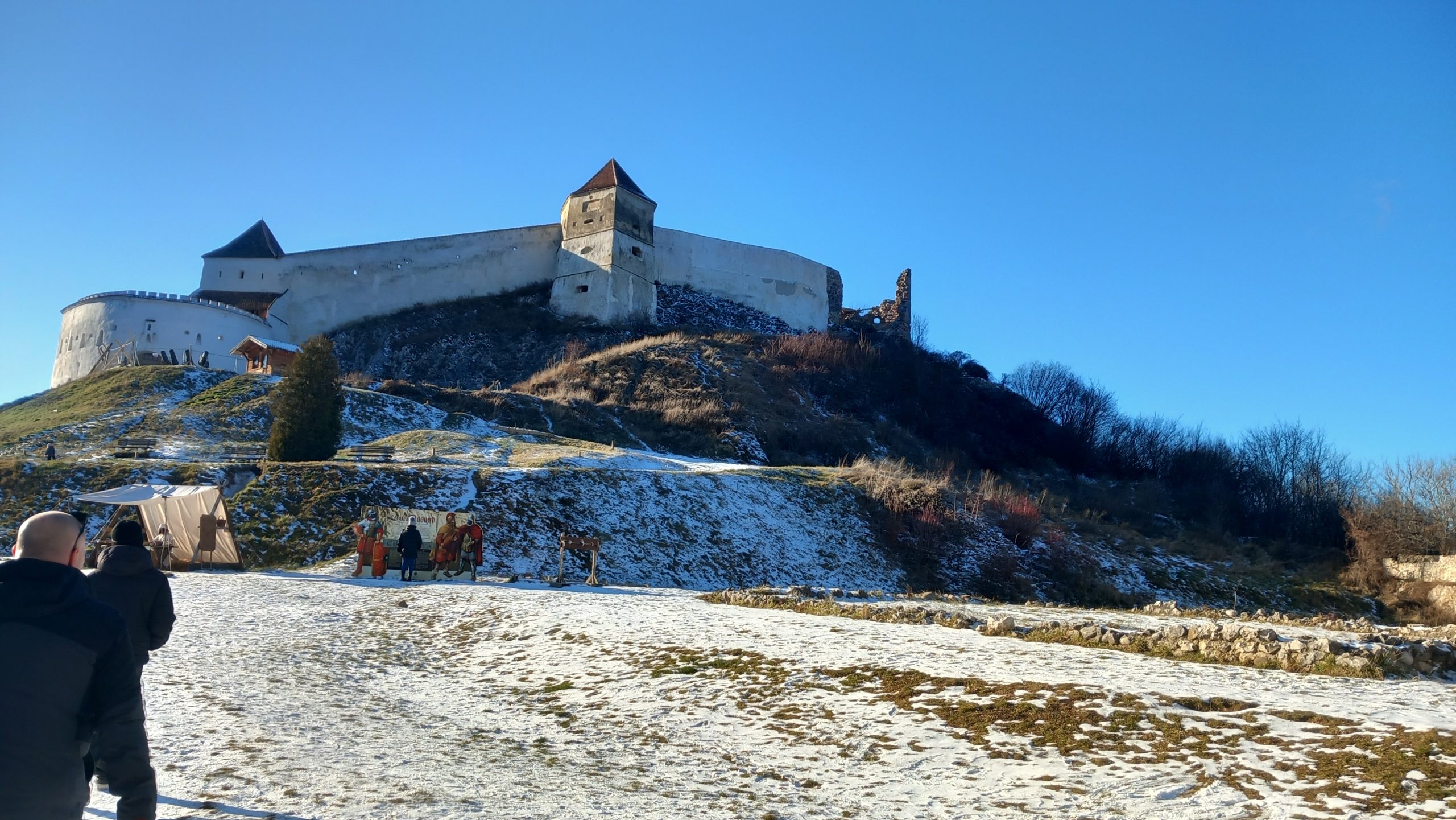
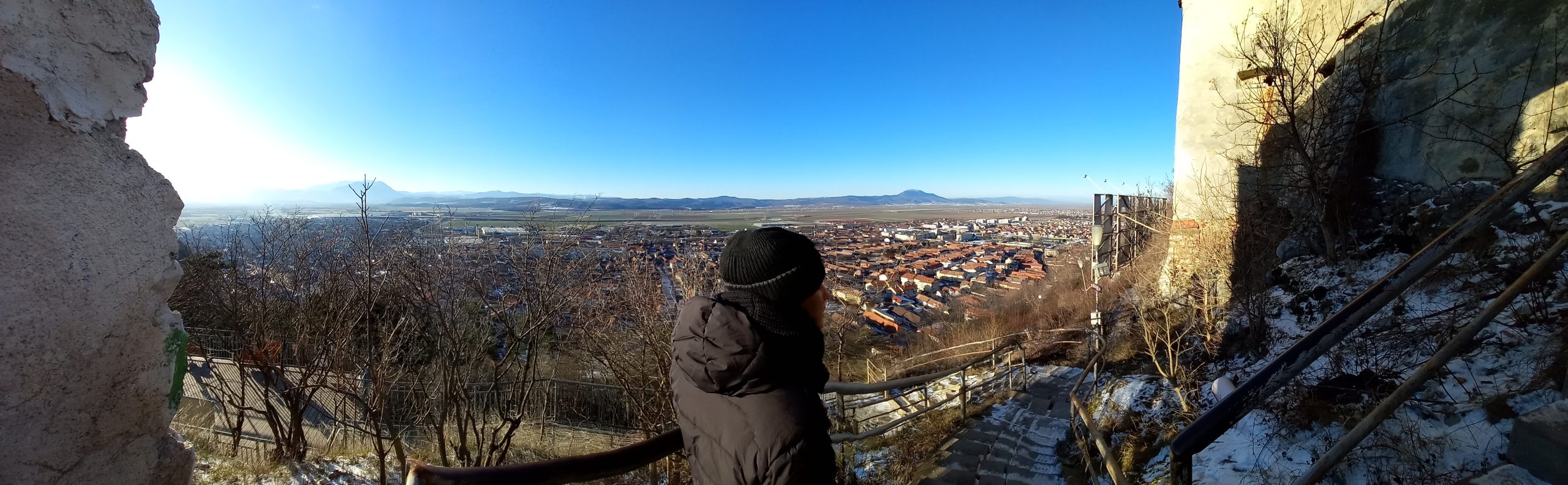
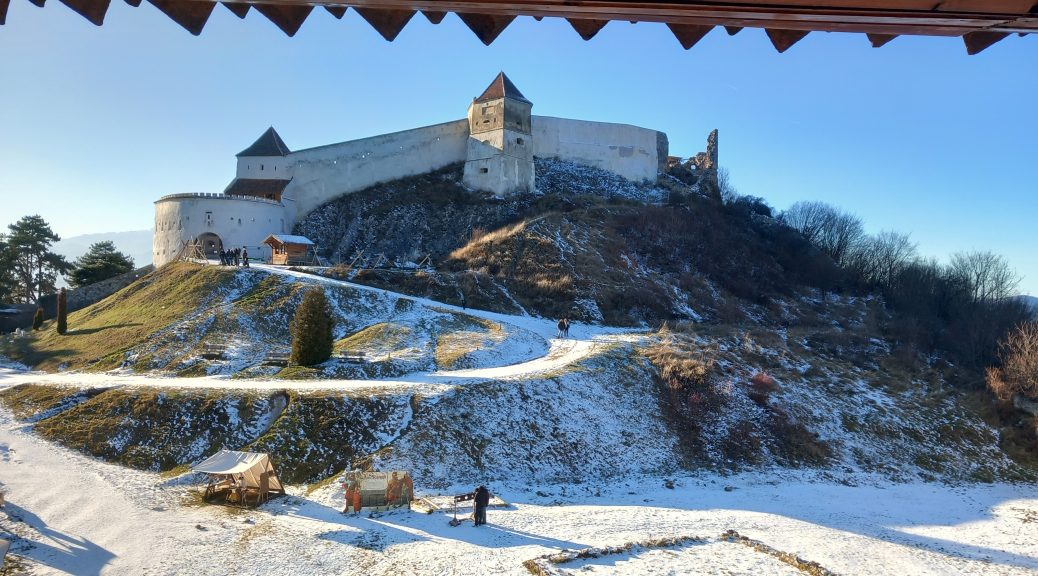
Again, I must compare now to 12-years previously. Then, there had been a space to park cars, a hut serving the drivers coffee, and very little else. Oh, apart from the ‘Noddy’ trains which ran visitors up the hill to the peasant fortress. The fortress sits on a hill backed by the Carpathians, overlooking the long, flat plane between Bran and Brasov. It’s known as a peasant fortress because it was a fortification built by and for rural Saxon communities for communal protection, rather than having to rely on the protection of a lord. Inside the battlements today is a reconstructed Saxon village, and although it was bitter, windy and quiet the last time we were here, the working village was the main attraction.
Now, at Rasnov, they have Southeast Europe’s largest dinosaur park, Dino Parc. There’s also a restaurant, a huge car park, and ugly tractors rather than jovial (if nauseating) Noddy trains. It’s a shame that the medieval village inside the fortress walls was being renovated, so we couldn’t see it, but it was lucky that it was December and cold. There were fewer viewers about, mainly families visiting Dino Parc, but that was below the fortress, though some creatures lurked and moved in the thick forest around us as we climbed the hill.
I’ll put the views in the gallery, so as you view the photos, you can imagine the biting cold, and the sound of the thin, bitter wind which watered the eyes, and I hope you take as much enjoyment from the sights as we did.
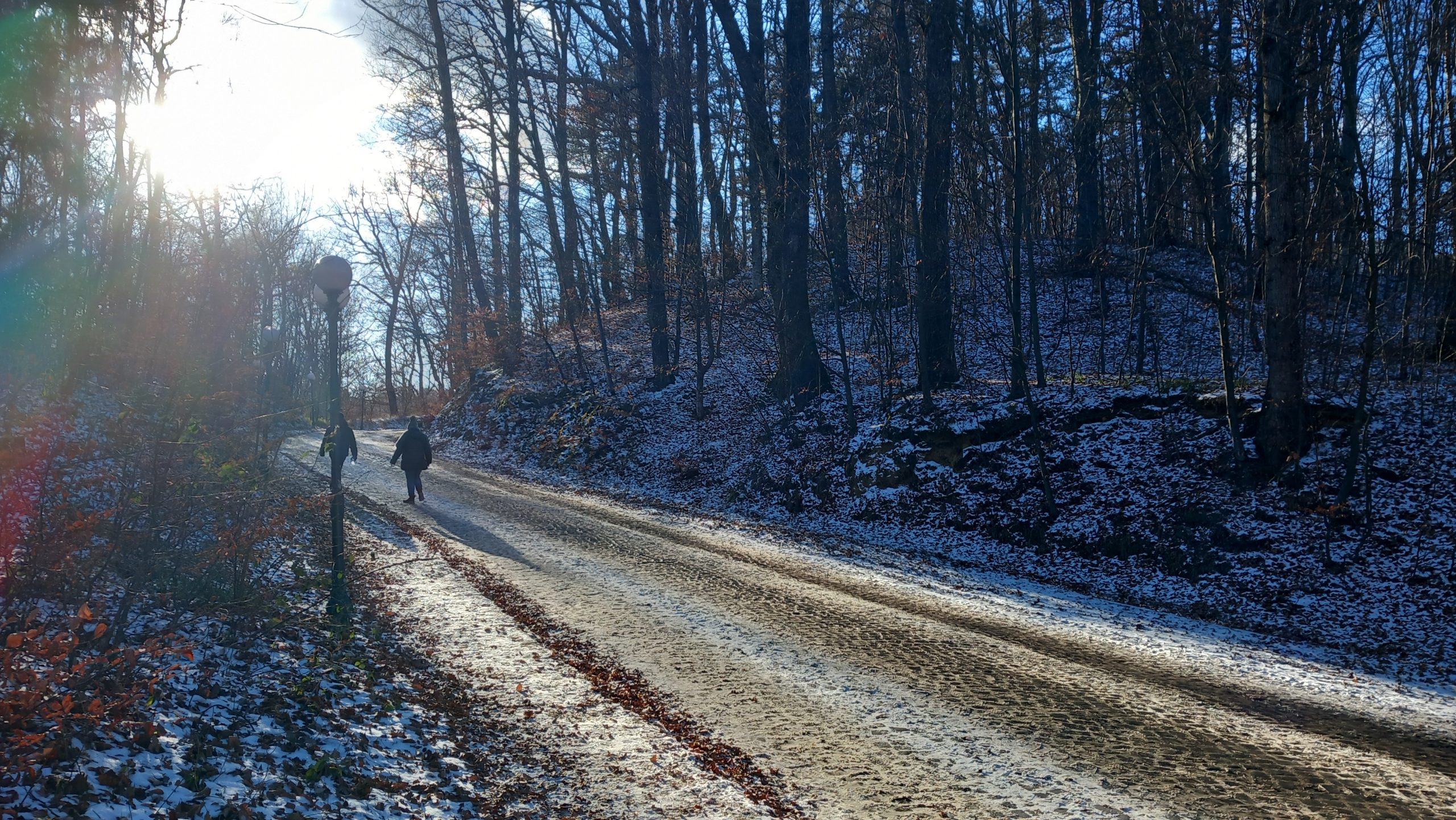
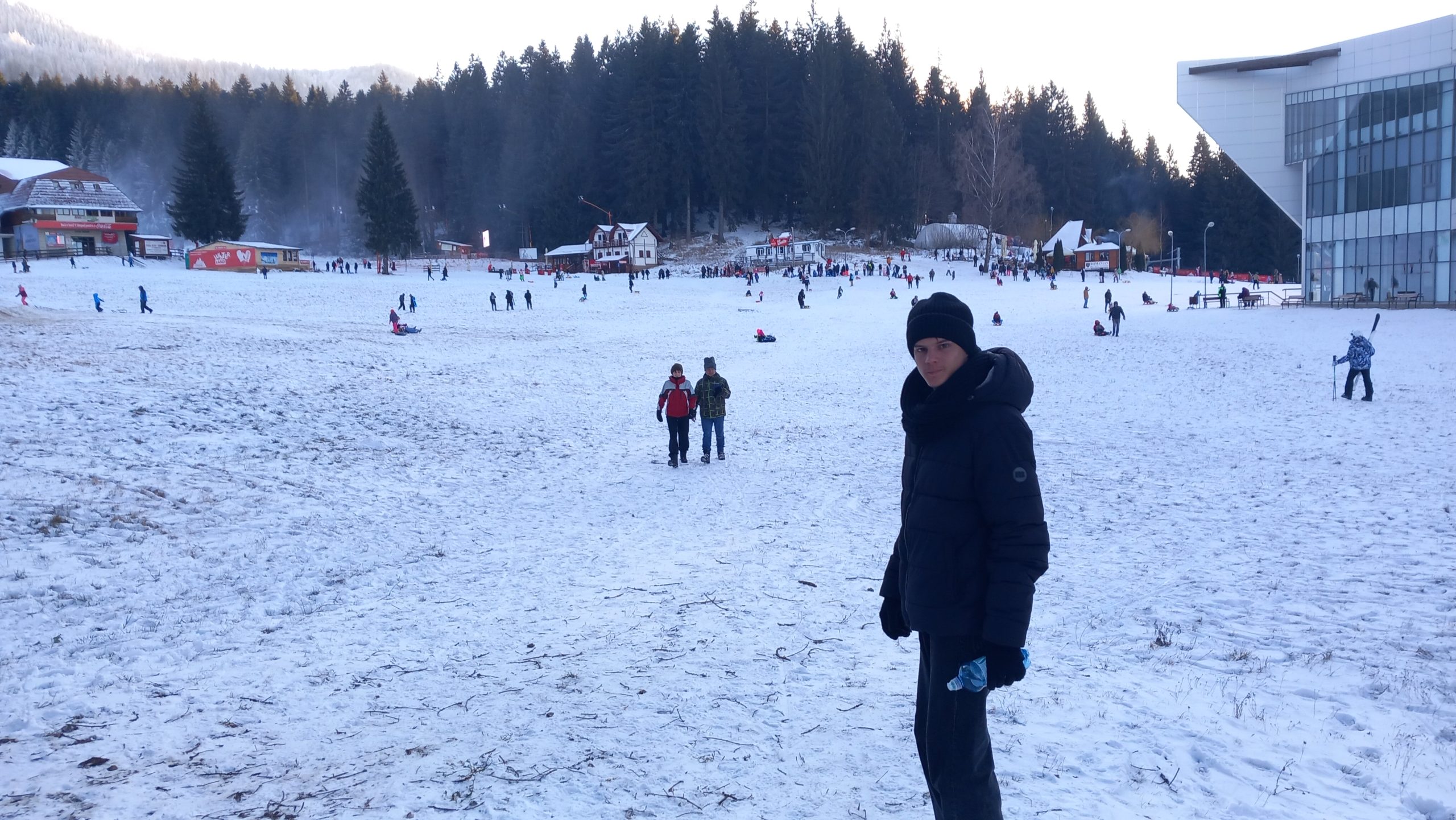
After this visit, a long walk and a chat with Marco about matters of history, and his experiences growing up under Communism, we drove to Poiana Brașov, Romania’s premier ski destination. Yes, it has much expanded over the years, is more popular, there are now banks of holiday chalets, new hotels going up, bowling alleys, fast food alongside financially impossible food, all the après ski you could need, and nowhere to park. We stopped only briefly for a look and a play in the crumbling snow.
It may sound as though I wasn’t particularly enamoured with this day, but I was. Very much so. Tourism has grown in the country, that was obvious, and that’s a good thing – as long as it doesn’t get out of control, as we have seen in other places, like Venice and Santorini. Every sight was a new one for some of our party, and an interestingly changed one for us. Marco was incredibly knowledgeable and drove safely. As he said, you don’t have to drive well in Romania, you only have to be clever. If you’re ever heading to Bucharest, Brasov or the surrounding area and want a reliable driver/guide, then check out his Facebook page. Highly recommended.
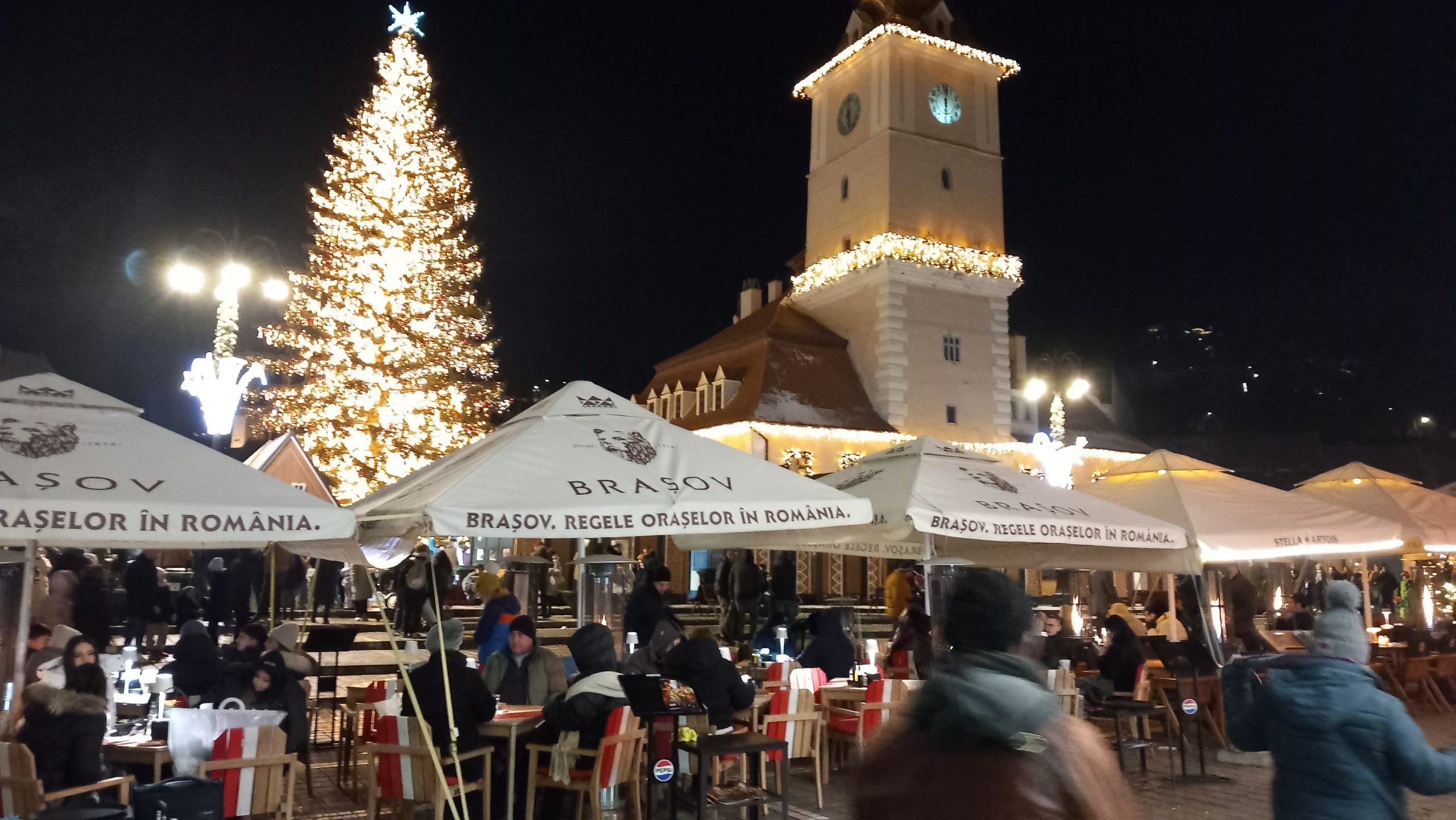
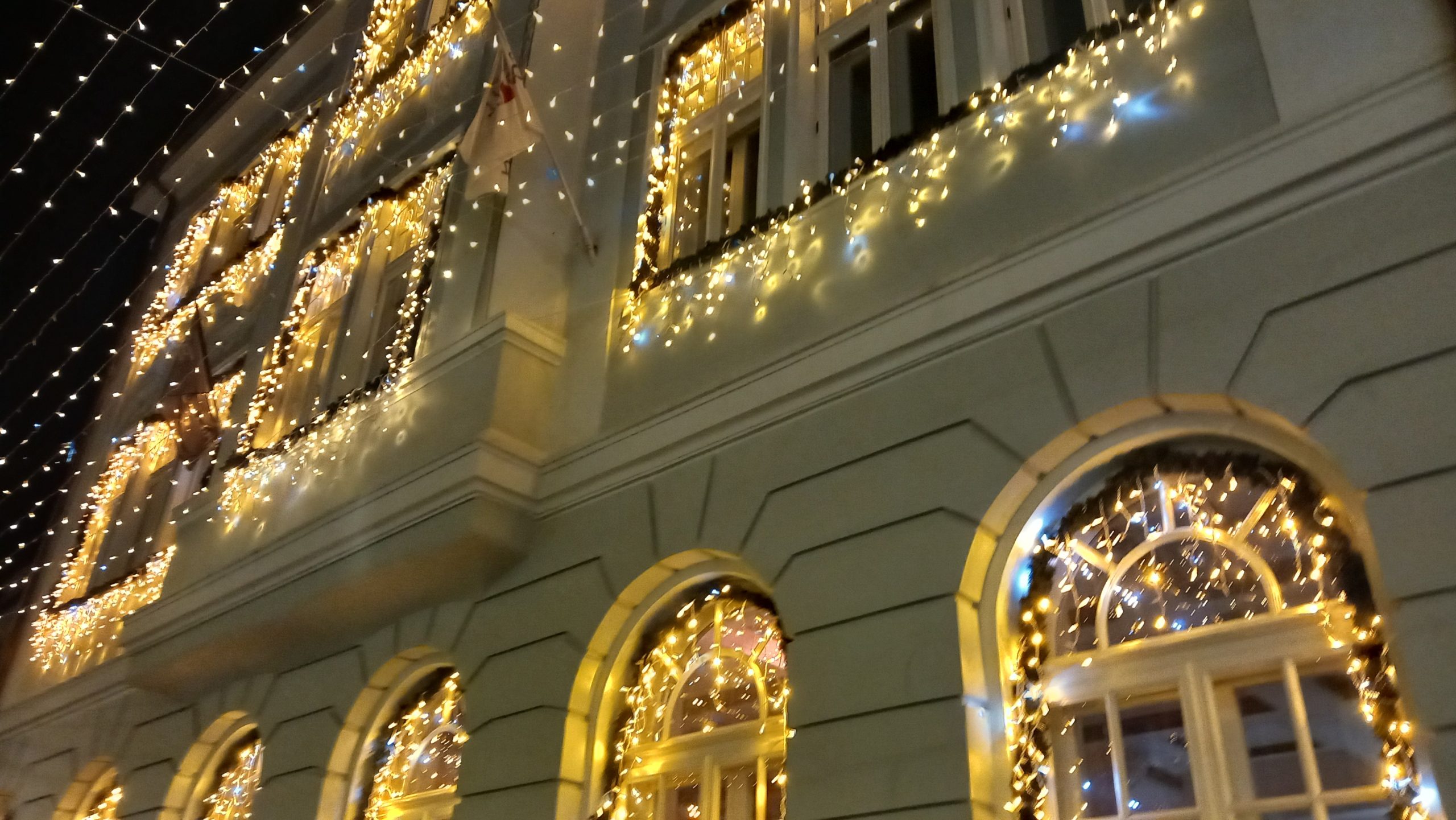
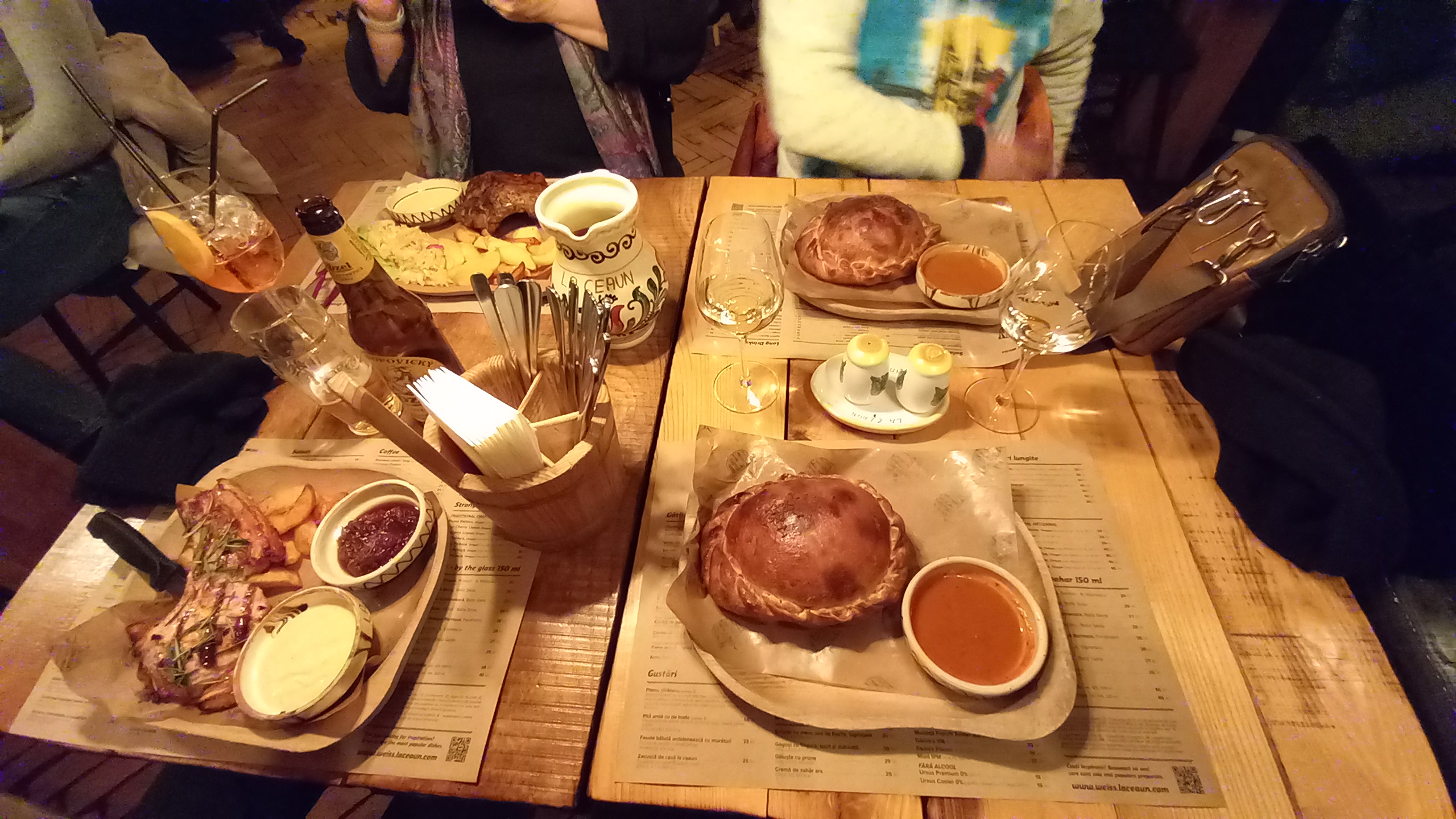
On the way back to Brasov, we stopped for more photos of the city from high on the road, and stopped again to take a look at one of the ancient towers, where Harry nearly took a purler on the slippery path. Growing up on Symi, you don’t get to walk on black ice very often, but his self-stabilising internal gyro worked in tandem with the flailing arms and ‘Whoa!’ sounds, and he remained upright. This proves that such an instinct must be passed down through the genes. At the end of the day, we were delivered back to our hotel/stage set. Here, we were able to warm up, change and prepare for another food hunt through the still glittering and thronged streets of the old town. After a wander, we found a restaurant that provided something slightly different to the norm, and ordered a fine dinner with local wine and beer. The meal provided the perfect end to a day of adventure, and saw us head home fed, tired, and contented.
Before you go, you might like to know that there are only a few more days left of this ‘What I did in the holidays’ before we return to normal Symi Dream viewing. I.e., not much news about anything because it’s that time of year. Just to let you know, it’s been wet and windy, the boat was delayed a few days ago, it’s now clear and cold at 6° this morning (Tuesday), and each time I venture into the village, I see no-one, unless we’re going to the super market, in which case, it’s its usual riot of warmth and humour. Not much to buy, of course, not unless you hit delivery day, but you know… Symi winter survival tip #1: If it’s there and you want it, have it; if not, make do.
Check back tomorrow for more of this kind of thing, and enjoy the gallery.