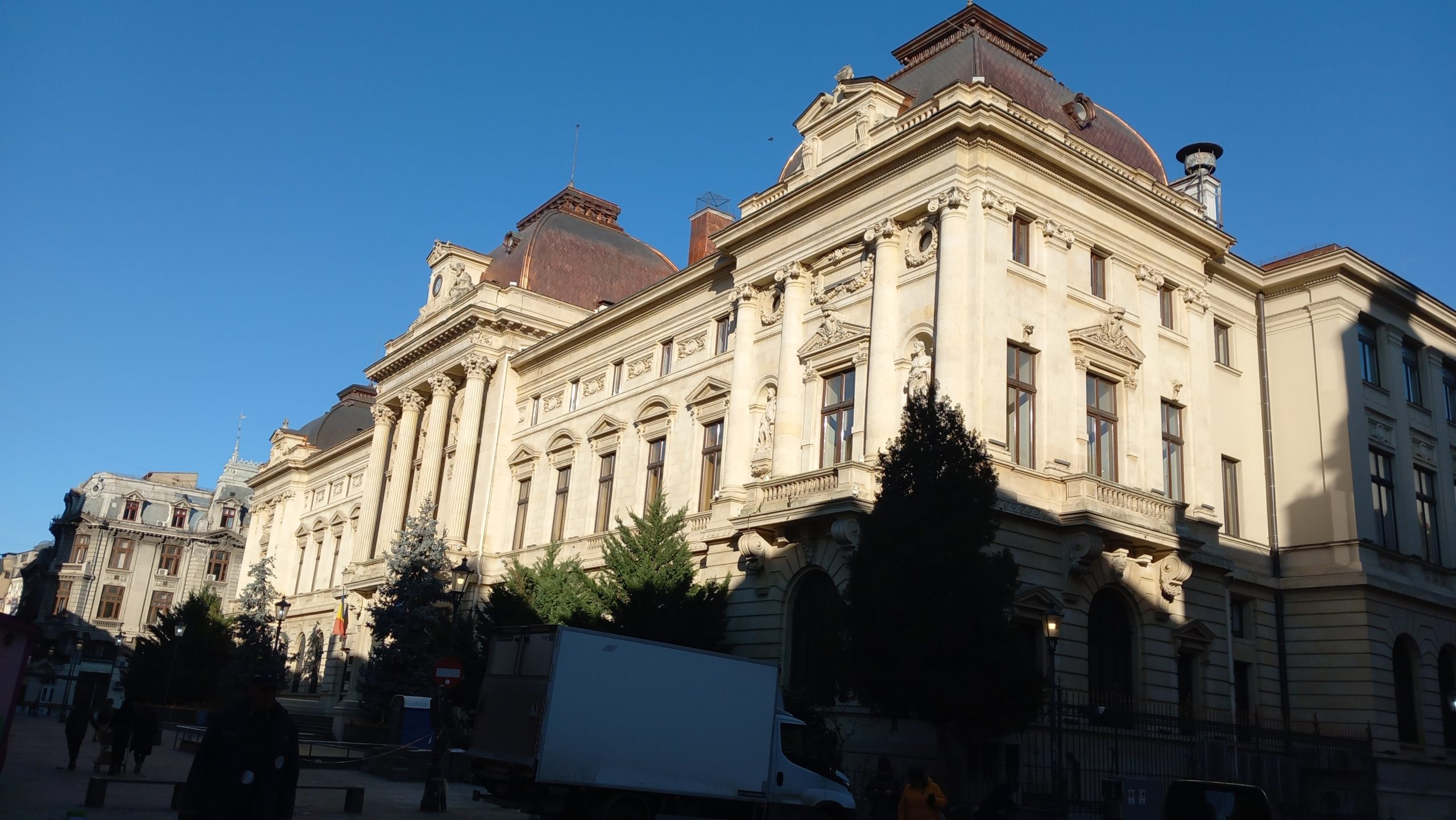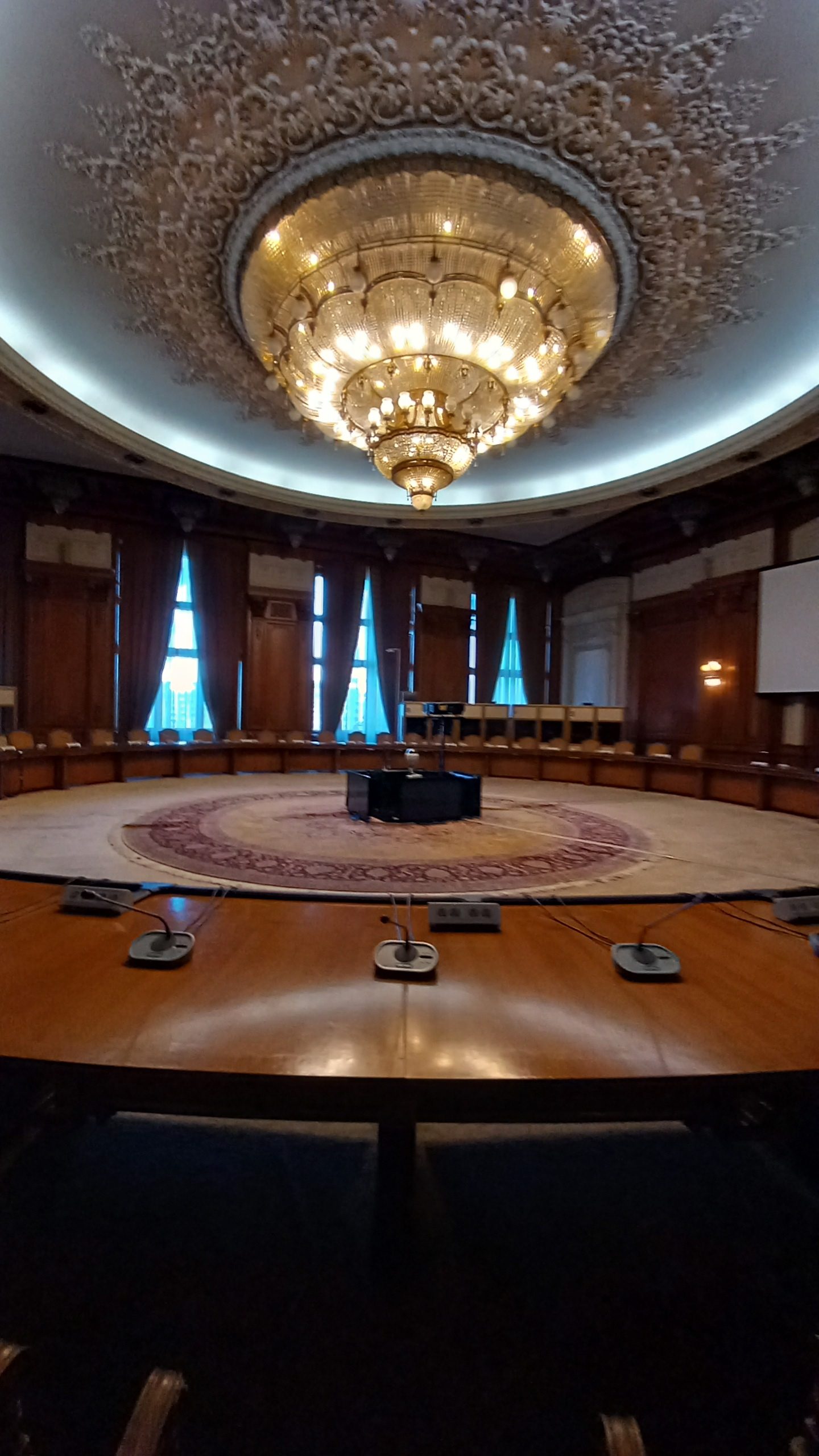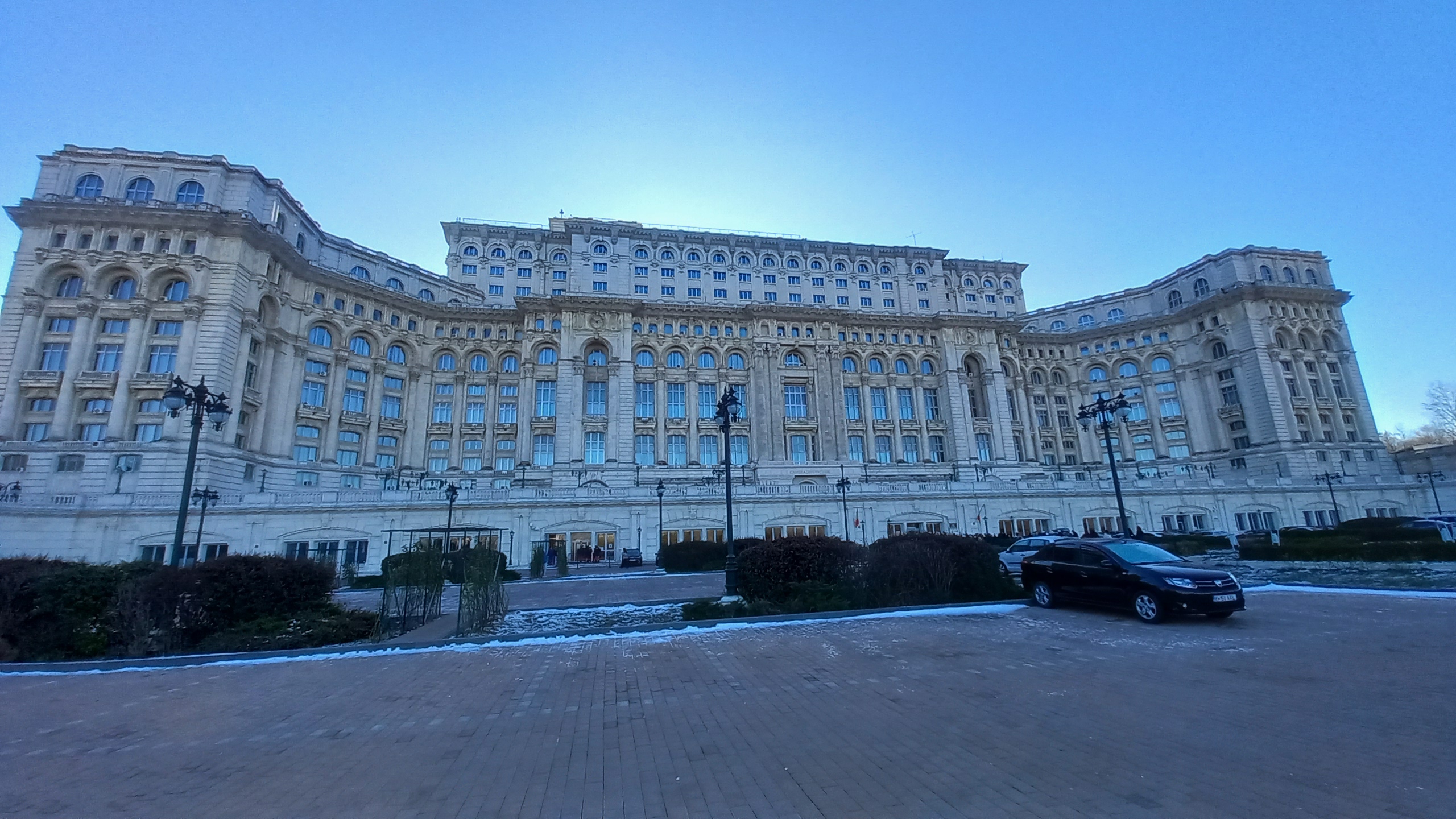
Here’s a quick history. Commissioned by communist leader Nicolae Ceaușescu as part of his vision for a monumental civic centre to showcase state power, the Palace of the Parliament was built between 1984 and 1997. Construction required demolishing large parts of an historic district in central Bucharest, displacing many residents and erasing old neighbourhoods.
We all know what happened to Ceaușescu, the man who would be king, and we can only imagine such a fall will come to other world leaders who serve only their own vaingloriousness. History has repeated itself from Julius Ceaser to Nicolae Ceaușescu, so let’s keep our fingers crossed.
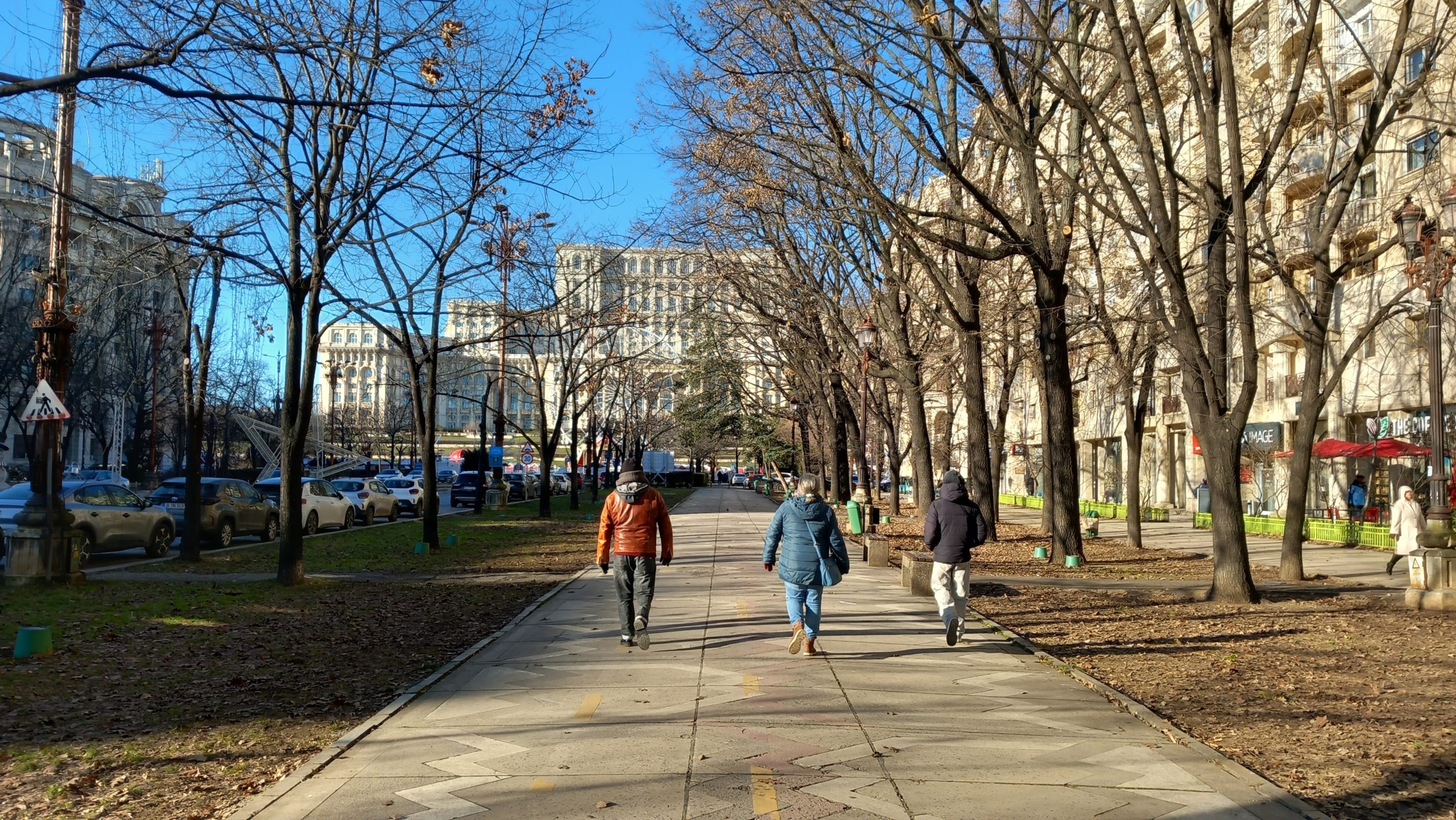
The reason for mentioning this is because we had booked a guided tour of the Palace of the Parliament. I’d booked this through GetYourGuide several months previously, but had later received a message to say the tour was cancelled that day. On the train yesterday, Jenine phoned the building and became great friends with Smaranda on bookings, and made a new reservation. If you plan to visit this building when in Bucharest, then don’t turn up at the gate hoping to get in. You have to phone the day before and join one of the few tours that they run in various languages. This, Jenine managed to do, so we knew where we had to be and when, and as usual, we were early.
Before that, though, we discovered that Bucharest has a Gregory’s. Gregory’s is a highly popular Greek ‘fast food’ outlet, a bit like Greggs in the UK, only better. They do pastries and pies, sandwiches and so on. Their prices are very good too, so to find one was a godsend for the godson.
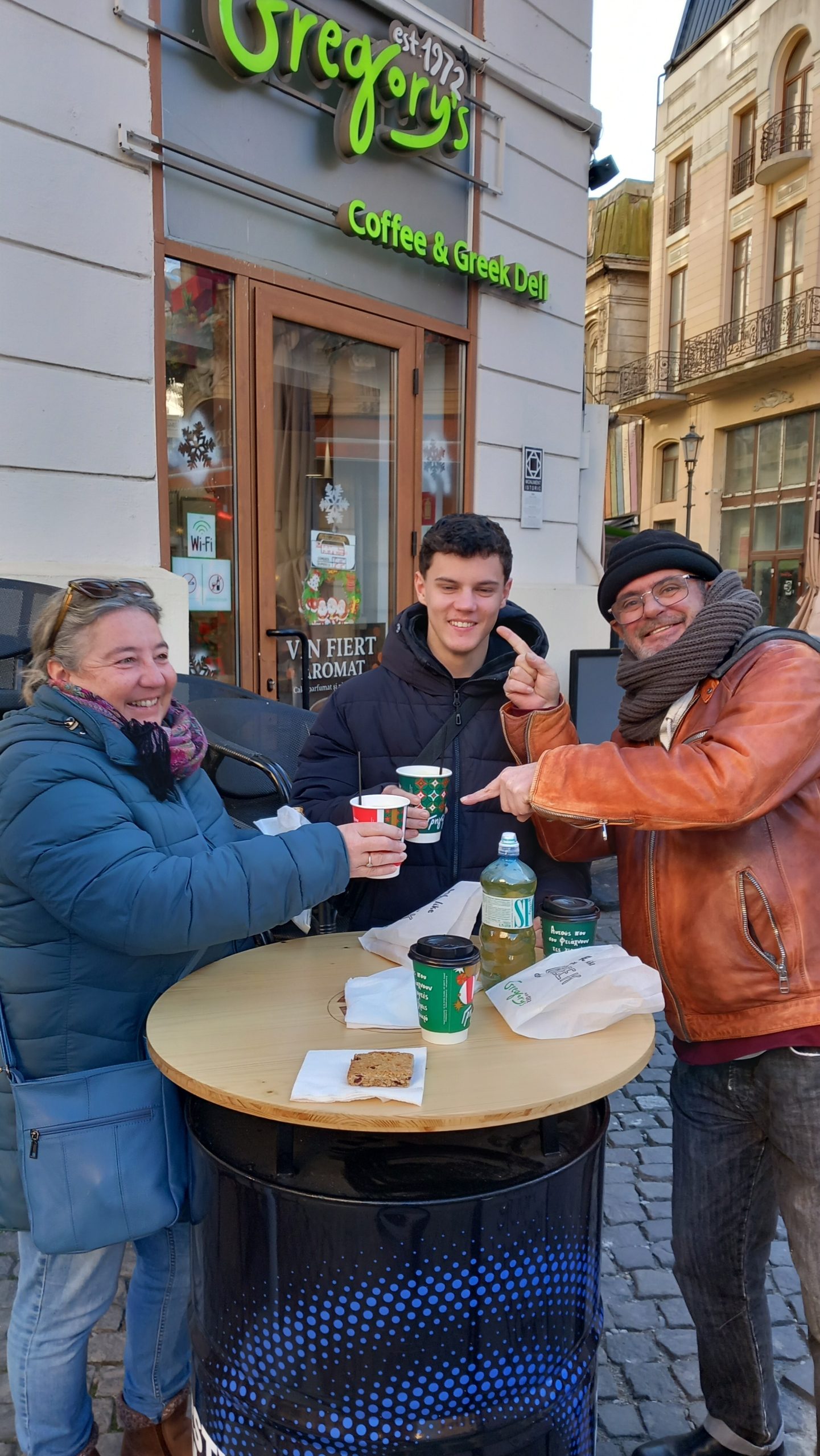
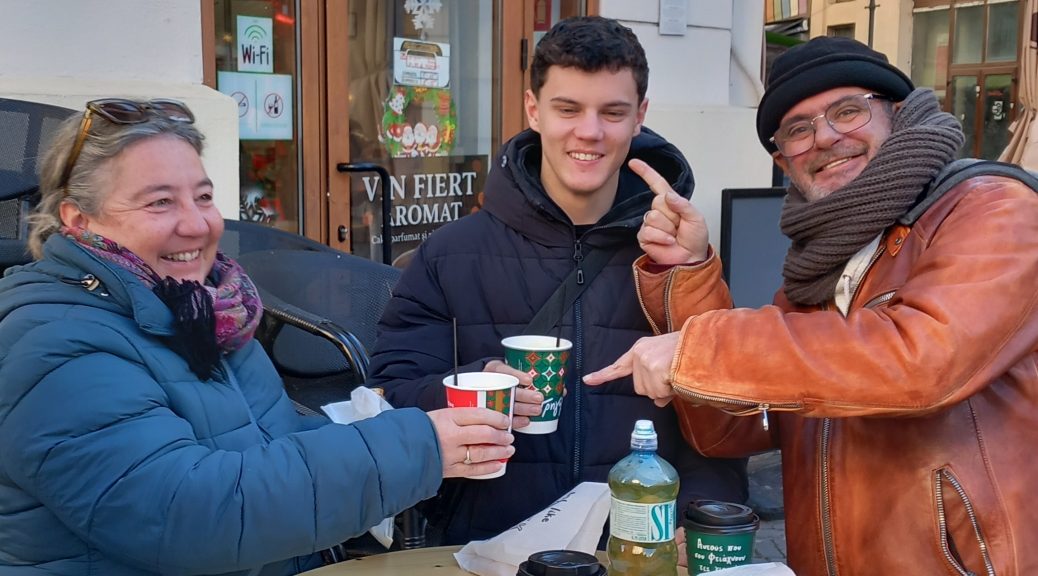
Bear in mind that the bouncing puffer jacketed map-reading trailblazer teen has still not found anywhere to serve him a café Frodo — or whatever that ponced up spit of cold coffee and water is called — but now, beneath the gloriously blue morning sky, the patron saint of coffee, Saint Frodo, appeared in a glorious light like a vision. Not only is there a Gregory’s, but it sells these café Fidos, and the boy is delirious even before he has sipped his expensive coffee flavoured ice cubes.
I had a cup of tea, and we walked on.
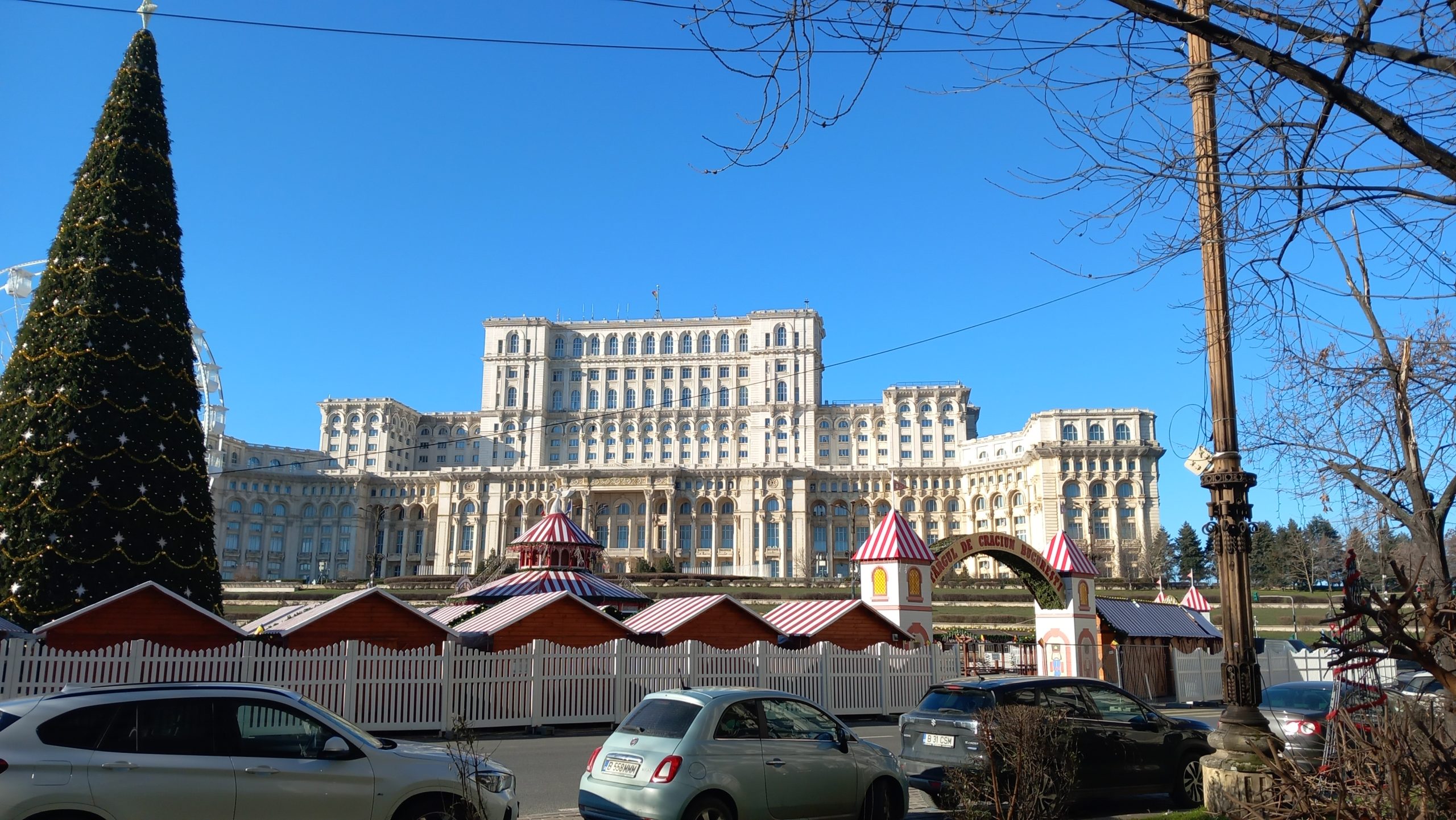
Here are a few facts about the massive building you’ve just looked at.
Floor area of about 365,000 m². Length approx. 240 m, and width 270 m. Volume, 2,550,000 m³. Height, 84 m above ground, with 8 underground levels extending as deep as 92 m below. More than 1,000 rooms (often cited as approximately 1,100). It’s considered the heaviest building in the world (about 4.1 million tons) and the largest civilian administrative building globally. In some rankings, it appears as the second-largest administrative building after the Pentagon. Cost estimated at around €4 billion, making it one of the most expensive administrative buildings ever constructed.
So, you’ve just got to have a look inside, right? Remember, if you do, book in advance. We arrived about 40 minutes before our tour, and didn’t have to queue in the cold for long, but the queue soon built up behind, as we passed through airport-style security, redressed, and found the ticket window. Here, you find a sign that tells you about how you have to pre-book, or go on a waiting list for the day, with no guarantee of success. You’d have thought they’d put this notice outside, so those waiting an hour to get in, get through security (passport scan and all), wouldn’t then discover they had wasted half a morning.
At the counter, Jenine gave her name, and told Smaranda on bookings that we had phoned ahead for the English language tour, and Smaranda on bookings found the entry on a rough piece of paper attached to her clipboard. Nothing about this, apart from the phone call, had been anywhere near a computer. This, at first, I thought endearingly old-fashioned, but then I realised it was probably the only safe way of avoiding hackers and the like. After all, we were in the building where the parliament met.
An exhibition of paintings kept us entertained while we waited for our tour, which turned out to be a mix of people and languages, though guided in English, and there were no more than 30 of us, so the group wasn’t large. Mind you, under the scale of that building, no group would look large. Is it impressive? Yes. Is it nauseating? In a way, yes. Is it worth seeing? Yes, if only for the gobsmack factor. Some of the curtains are about 16 m high, and weigh over 250 kg each — that’s more than 550 pounds per curtain. In total, the palace contains about 2,150,000 sq ft of woollen carpets, many of which had to be stitched together in situ. A total of about 900,000 m³ of wood was used for parquet floors, wall panelling, doors, and other decorative elements, and there are over 3,500 tonnes of crystal in the chandeliers.
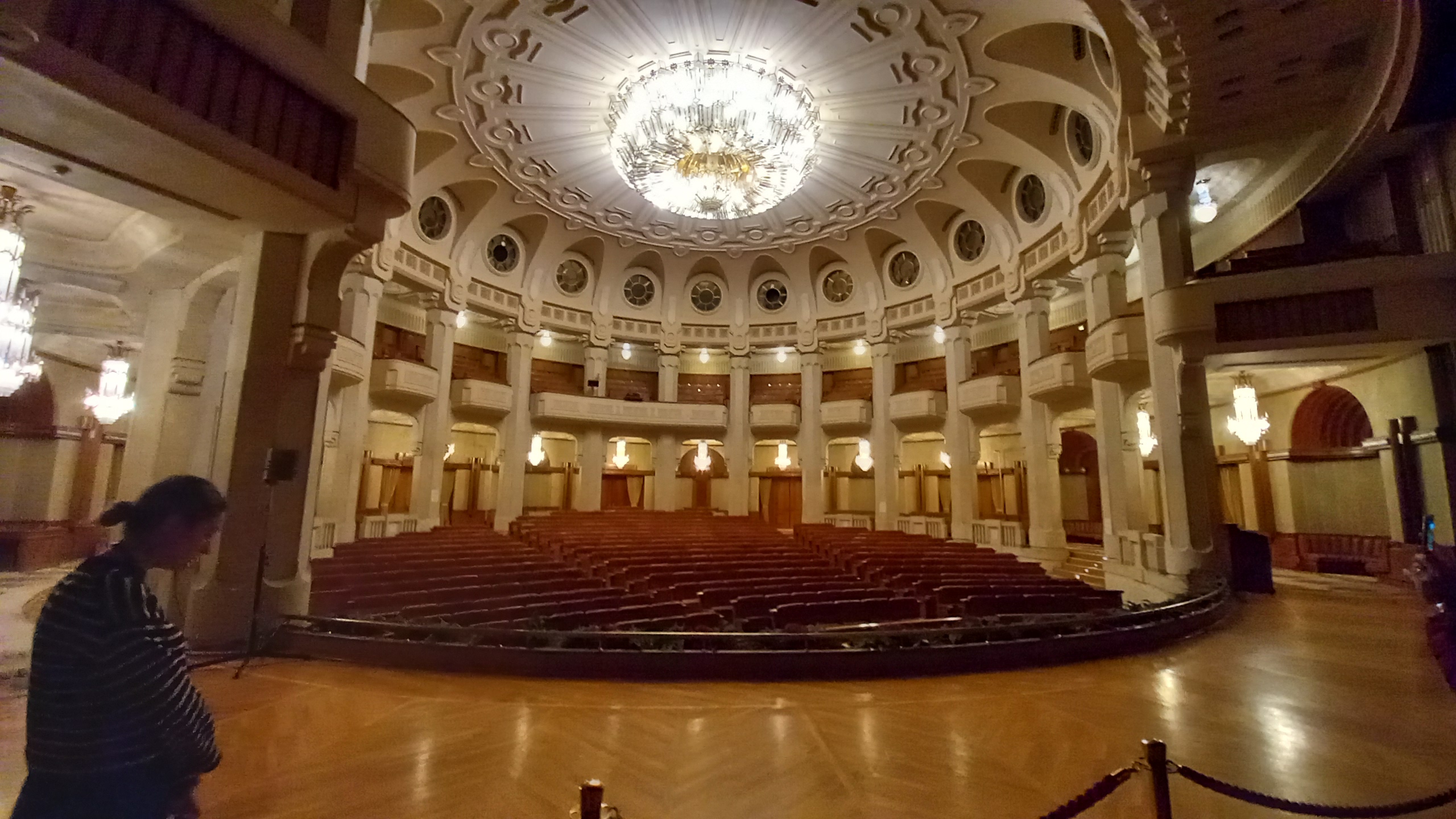
I could go on, but you get the idea? Communism at its finest. Having said that, about 95% of everything used came from within Romania, including much of the gold.
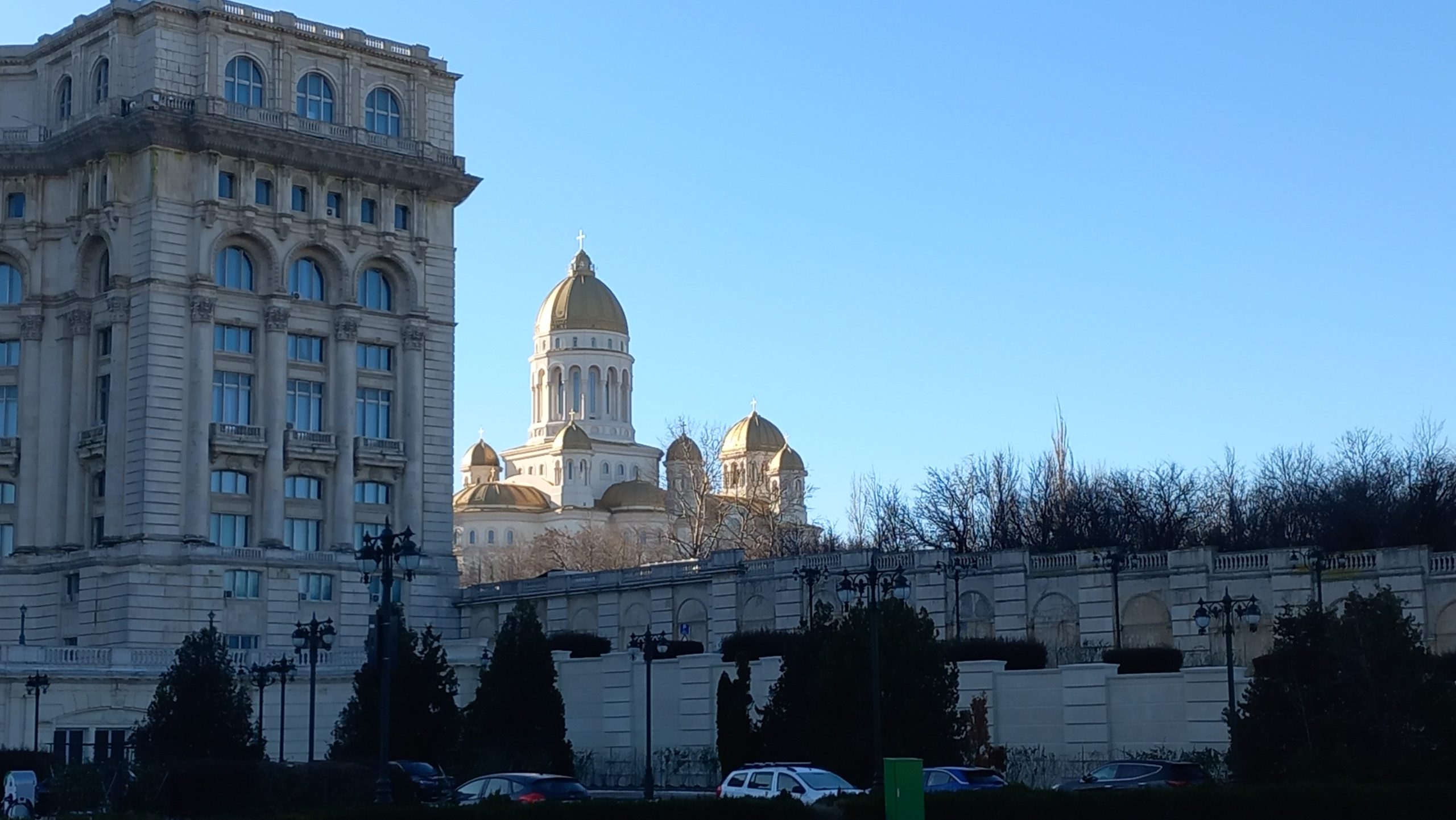
The hour-long tour done and enjoyed, and it was back into the crisp day to gaze at what you might call the Church’s revenge. We will visit this tomorrow, but I’m talking about the largest Orthodox cathedral in the world, currently nearing completion on a plot of land that Ceaușescu had had flattened to make way for his palace. While doing so, he destroyed many churches, and now, they are building the cathedral right next to his ‘palace’ as if to reclaim territory with a vengeance. Looking at it from outside the palace, it seems small, but just wait until tomorrow when we’ll see it from the other angle.
From the palace, we walked over to Revolution Square, where we hoped to get into King Carol’s art collection at one of the museums, but found them all closed that day. Never mind, there’s always food, but after viewing other sights, and having found no suitable eatery, we wandered back to the Old Town, and surprised a tout by walking straight in. It was the first place we’d come to. This was a halal restaurant with all the usual Romanian fare, and we ordered what we ordered, including a glass of wine for Neil. ‘And a bottle of water,’ he added to the list. When, a minute later, the waitress put down an ice bucket and opened a bottle of Chardonnay, we realised there had been something lost in translation, but what the hell? It was New Year’s Eve.
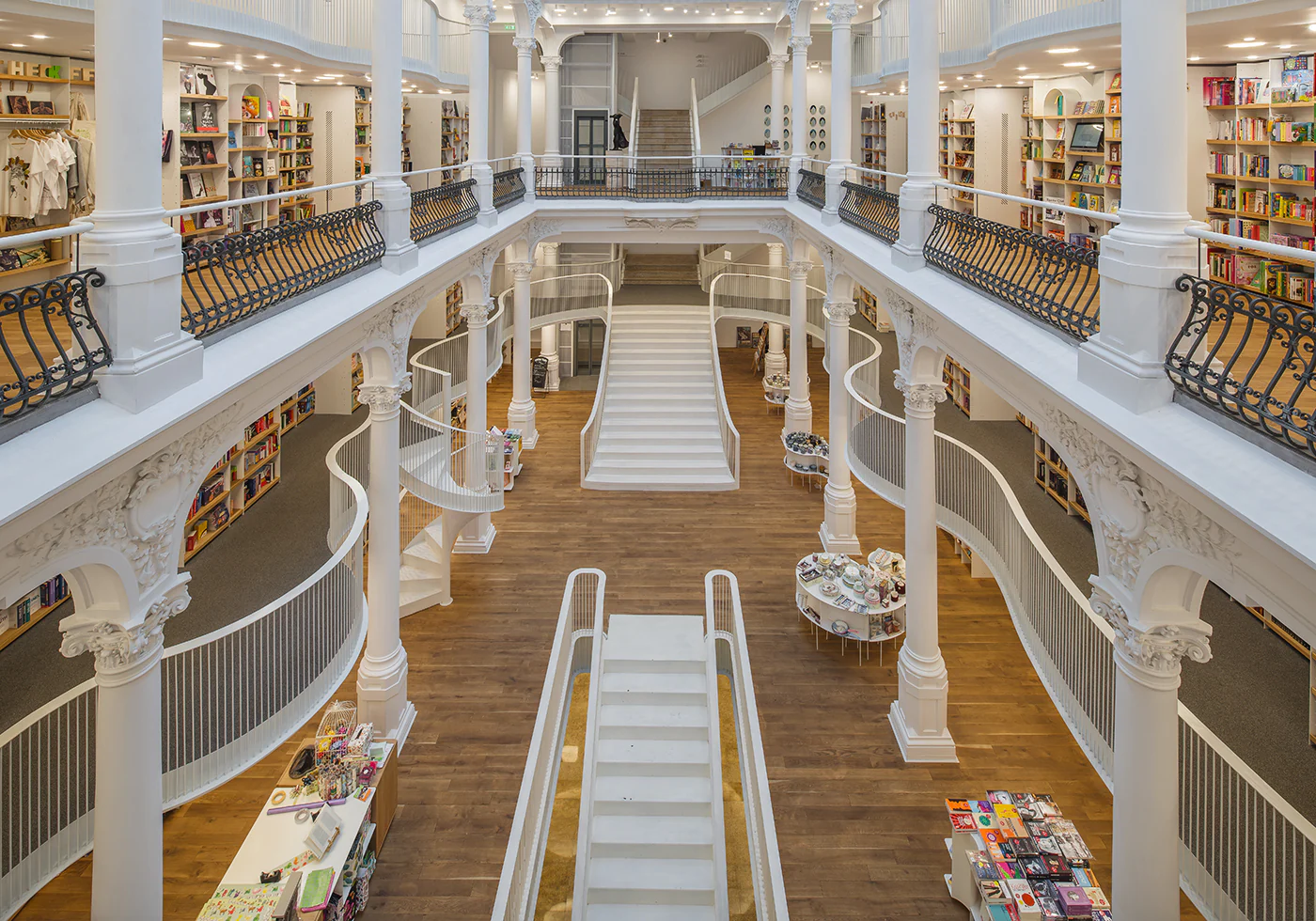
It was also more than €50.00 for the bottle of wine, and we never did get the water, but, just like the polenta and sausages, we swallowed it, enjoyed our lunch and then visited a very popular bookshop. This is Cărturești Carusel, and here’s a Google quote about it:
Stepping into Cărturești Carusel feels like entering a dreamlike realm where books, art, and architecture merge seamlessly. The interior’s minimalist white décor highlights the grandeur of the neoclassical design, while the six levels of bookshelves create a mesmerising visual effect.
Indeed. The place was thronged with people who’d come in for a gander, and with others who had come to browse for a book, a game, a whatnot, and some who had come to pick up a book, take a seat and read, somehow finding peace among the mayhem.
The next question: What to do on New Year’s Eve in Bucharest? The internet had told us that there was always a fireworks display and noisy party in Unirii Square, but we’d passed that in the morning, and it was a building site. Various parties were being touted at various Irish bars and restaurants, but we declined and decided we’d spend the evening in. This required supplies, so we raided a small supermarket and unashamedly came away with three bottles of Prosecco, three bottles of Chardonnay, assorted snacks, water, gummy bears, and one can of beer for the sensible teen, and all for less than the price of the accidental lunchtime bottle of wine.
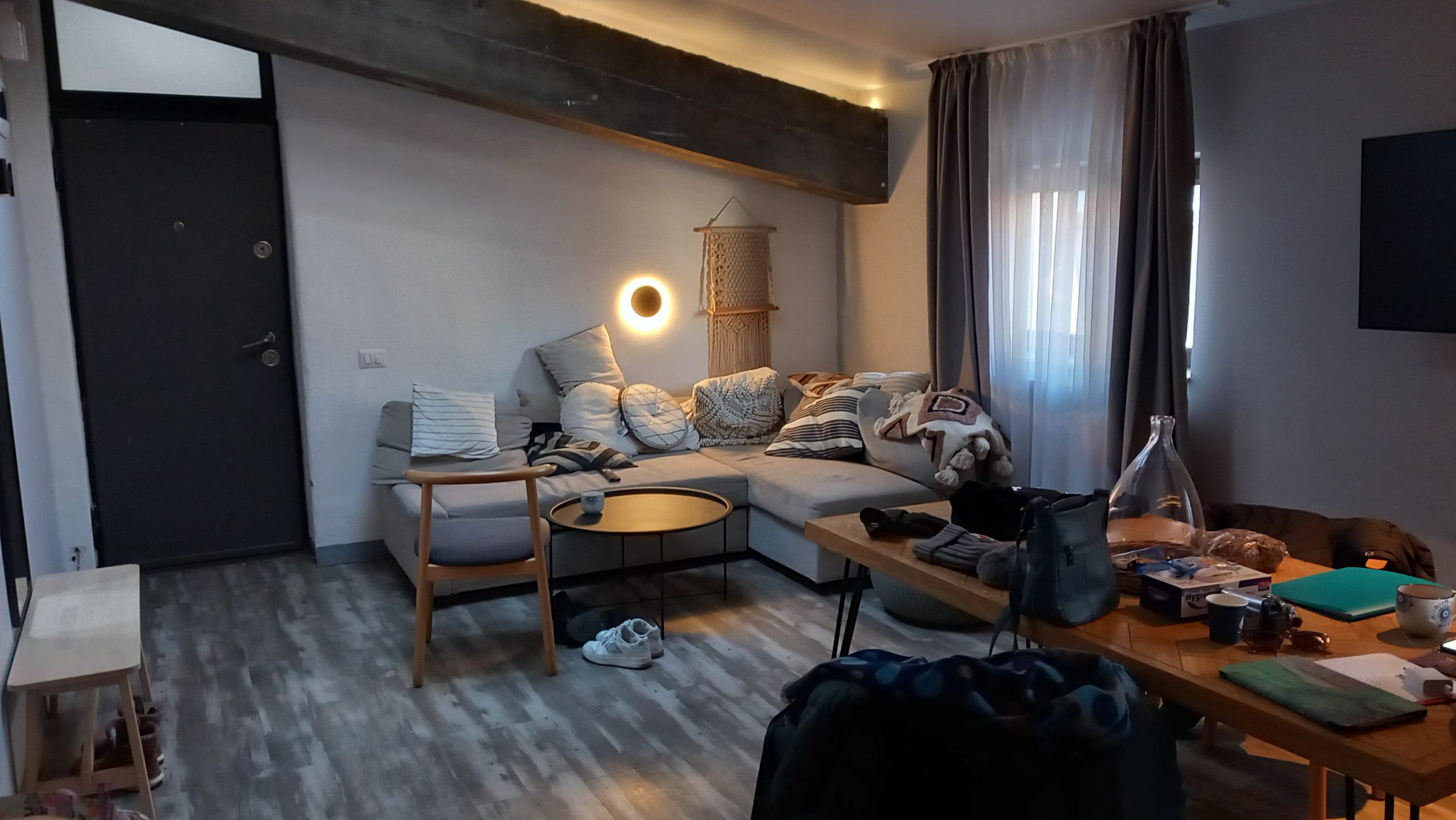
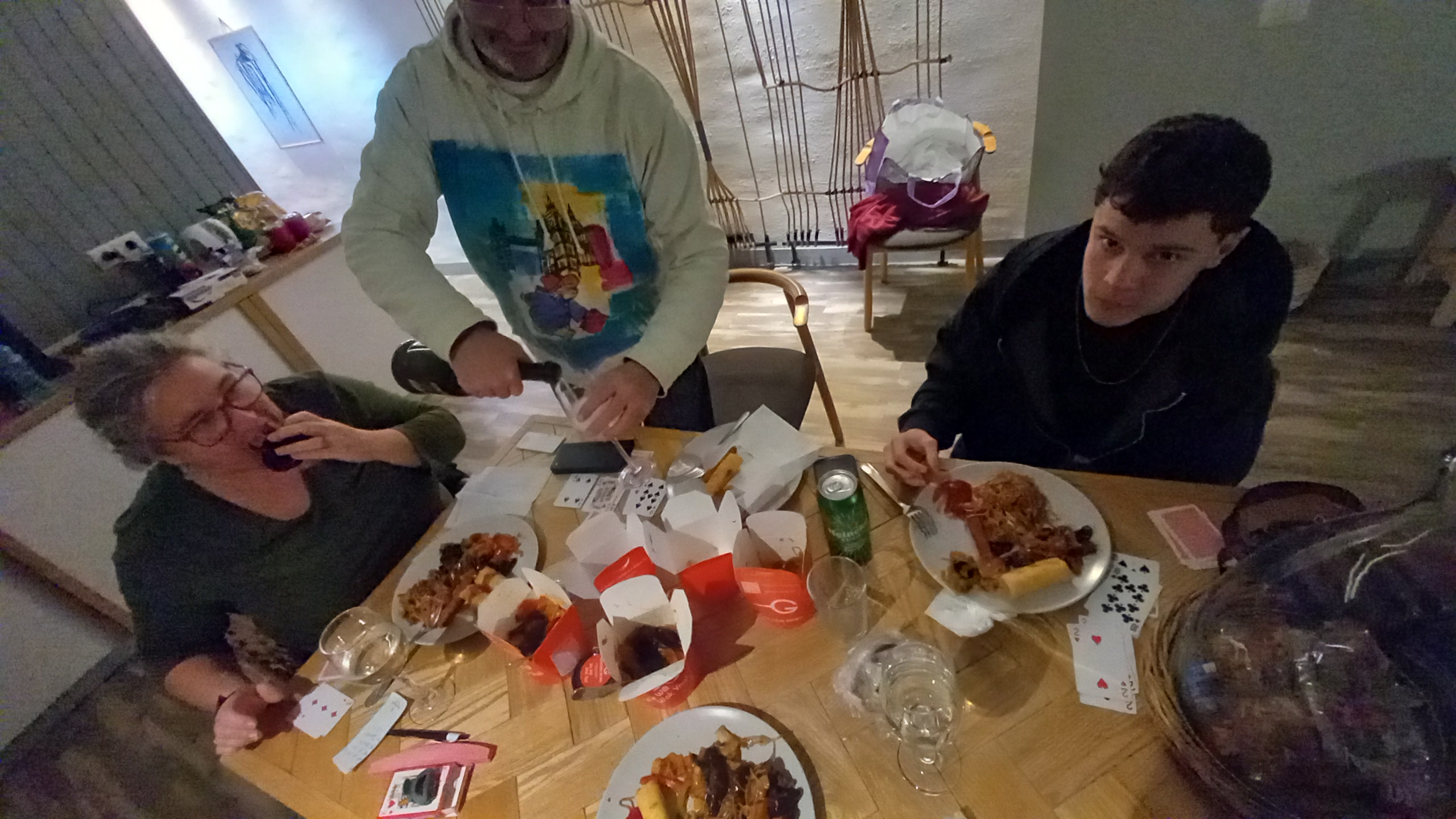
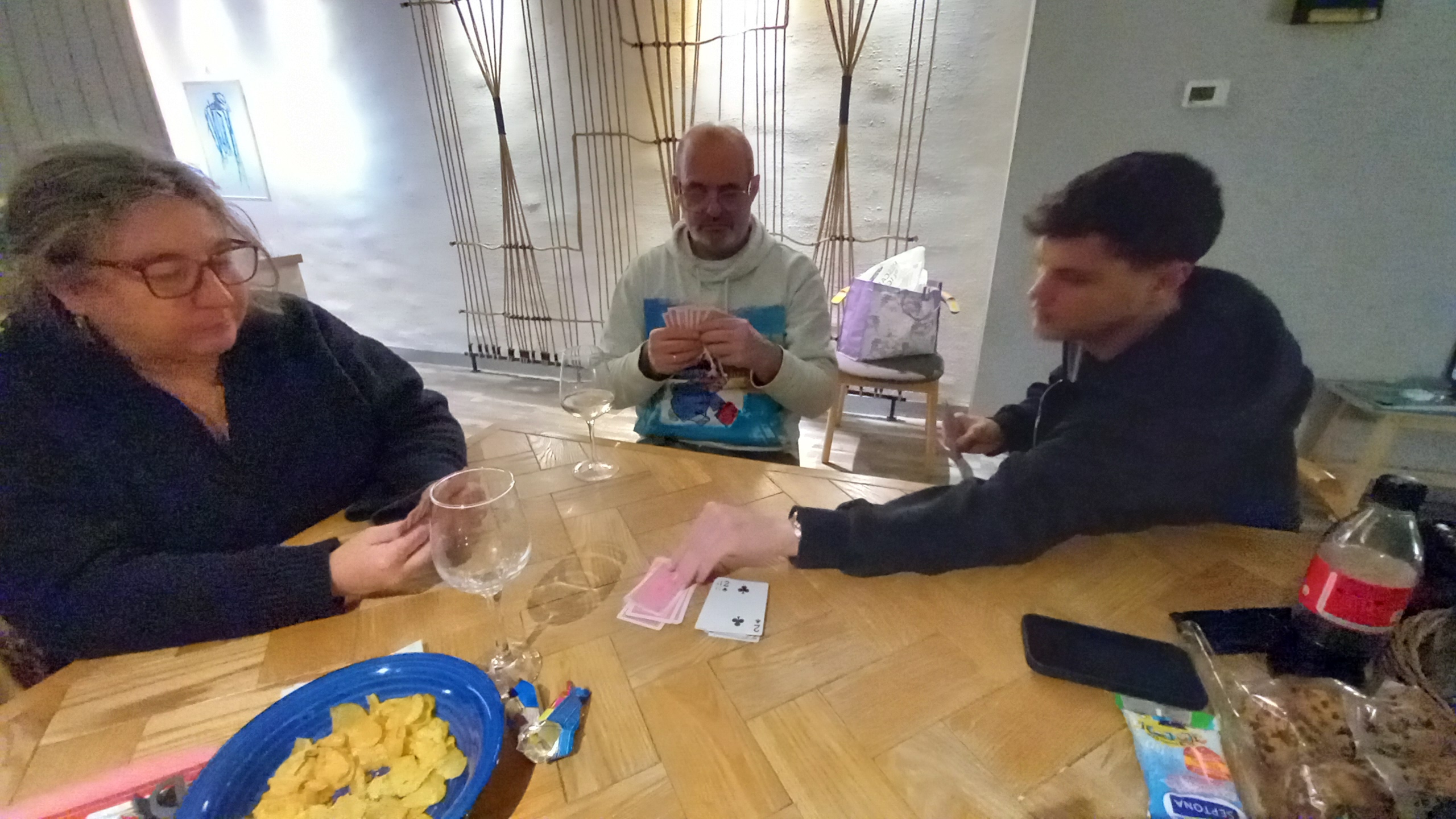
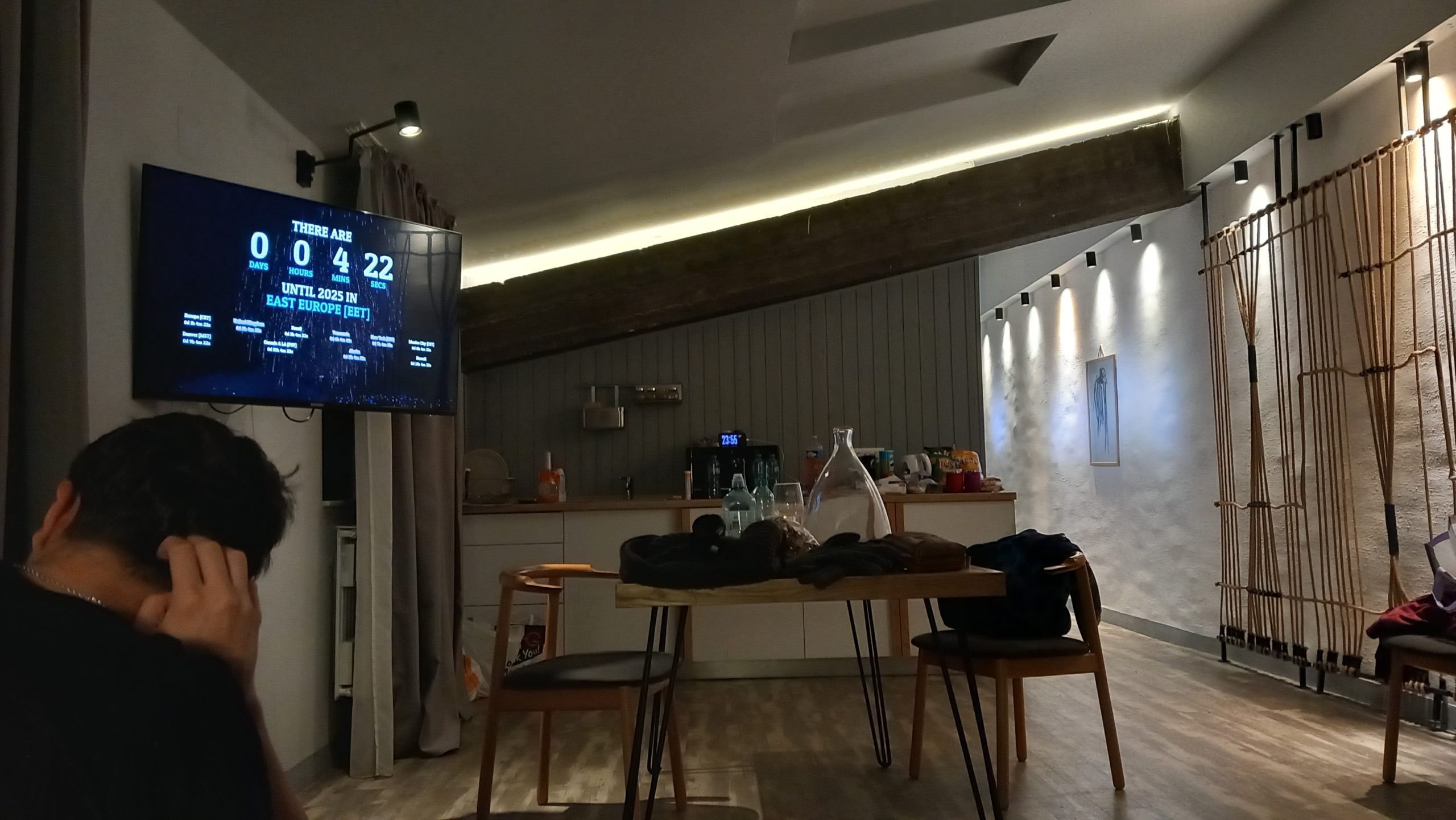
That secured, we made ourselves at home at home, ordered a random Chinese delivery, random because the menu was vague, but it arrived, and we enjoyed it while playing cards. All the way until nearly midnight, when we stopped, found a countdown on the TV, and waited for the midnight hour.