Using commas
Today I wanted to look at commas, as opposed to comas which I hope this post will not induce. , – there’s one for you. You’ll remember that in our riveting discussion on possessives, we met the difference between its and it’s. Today, with some Symi photos to keep us vaguely on the ‘living in Greece’ theme that this blog is sometimes about, I want to explain a few rules about the use of a comma. I’m doing this partly as an exercise to help me remember (which I constantly do not) and partly to give you something to read about on a Saturday morning. I’ll try and relate the examples to Symi, to relieve some of the stress of this ‘lesson.’
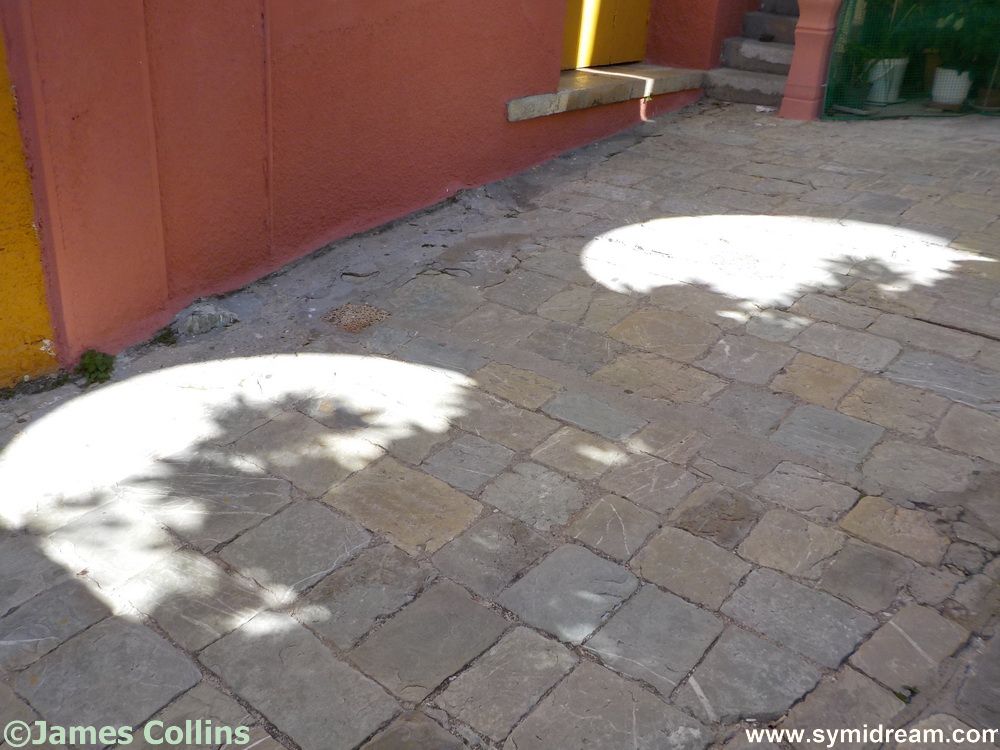
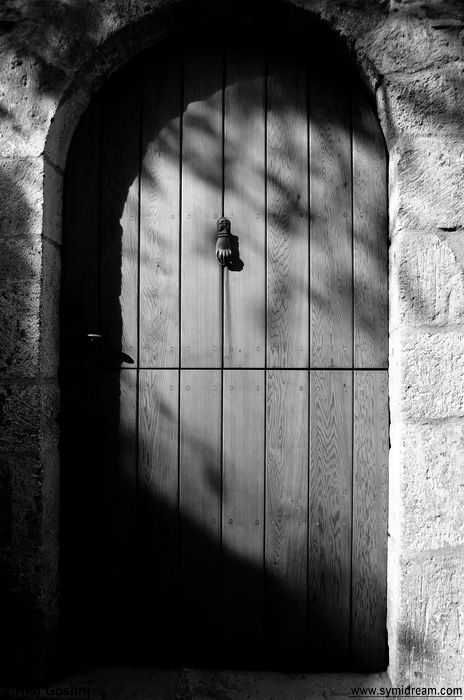
Light through arches on the Kali Strata
Okay, first up: When you are writing a list of three or more terms with a single conjunction, use a comma after each term apart from the last. [Strunk & White, you can find the full book here.] Examples:
Blue, green, and aquamarine (the colour of the Greek sea)
Euros, Drachma, or something else (the potential Greek currency last year)
She came to Symi, looked at the island, and fell in love with it
The comma here is known as a ‘serial’ comma, and some folk are serial serial comma users, if you ask me. (The comma also makes the vital distinction in some sentences, example: Let’s go and eat Grandma, as opposed to, Let’s go and eat, Grandma. But we should come to that later.) When writing business names you don’t need to use the serial comma: Grabit, Bodgeit and Scarper (well-known firm of builders), has no second comma, you will note.
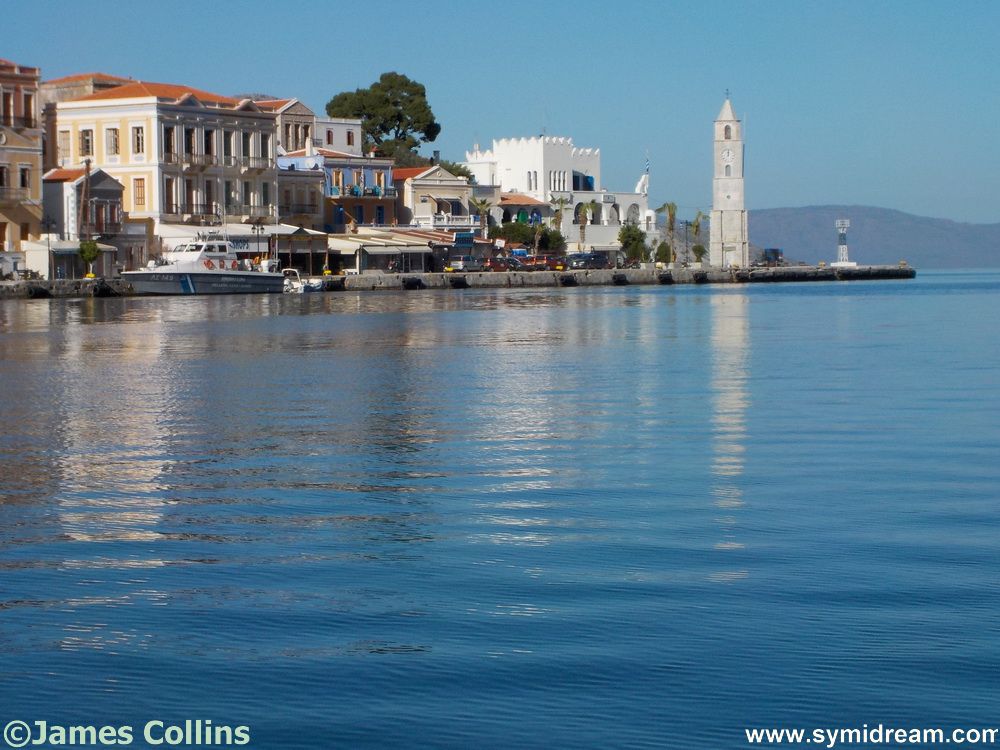
Symi harbour and clock tower
Secondly, if you are putting a thought in an imaginary bracket, then use commas:
The only way to arrive on Symi, unless you want to swim, is by boat. A little ‘aside’ is inserted there with a comma either side. Choices arrive when you have words such as however, should you write: The best way to get to Symi, however, is by boat. Or, The best way to get to Symi however is by boat. (With no commas.) The general rule is less is more as long as it makes sense, but only ever use two or none, never, for example, write: The best way to get to Symi however, is by boat. I am sure I do that all the time. Naughty me.
The exception to this might be dates: February 20th, 2016.
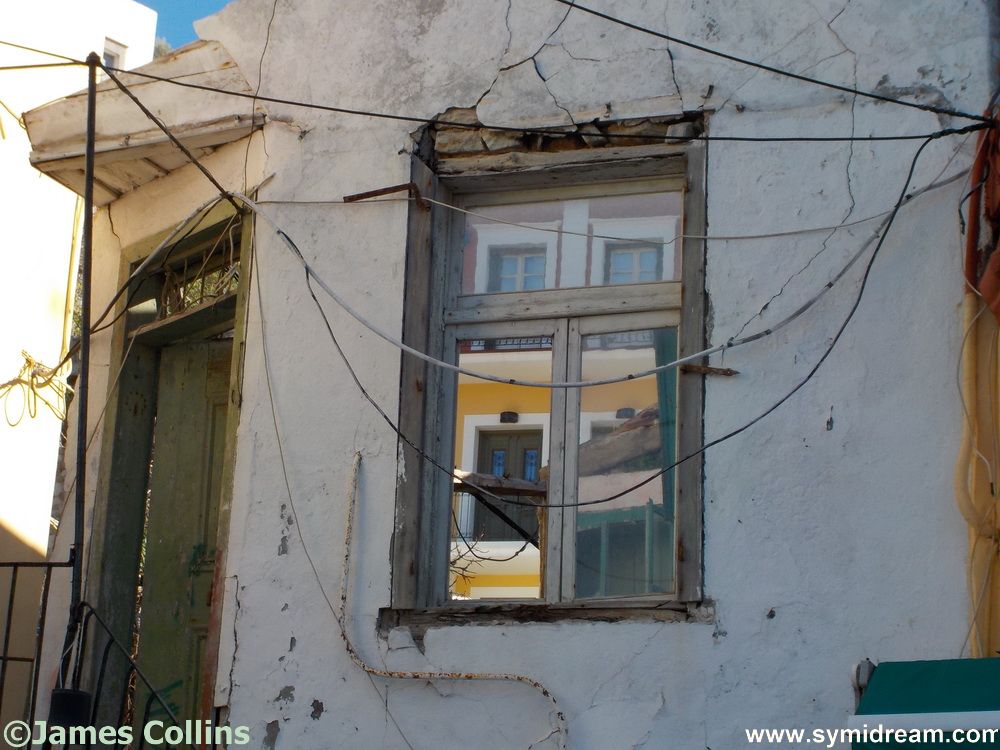
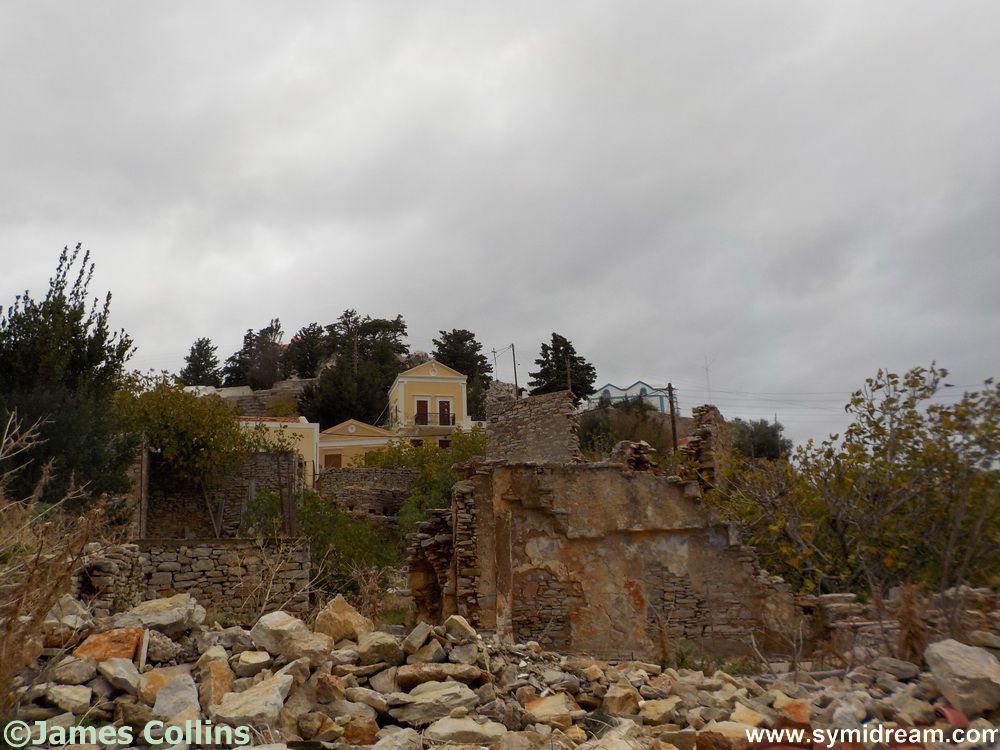
An internal-less building; you can see the other buildings through its window
A name or title in a direct address should have commas around it: If, Madam, you have not booked, you may have trouble finding accommodation in August. So should abbreviations: Moussaka, gigantes, etc., are all on the menu. An exception may be seniour or junior abbreviated: Yianni Poseidon Jr. (No comma.)
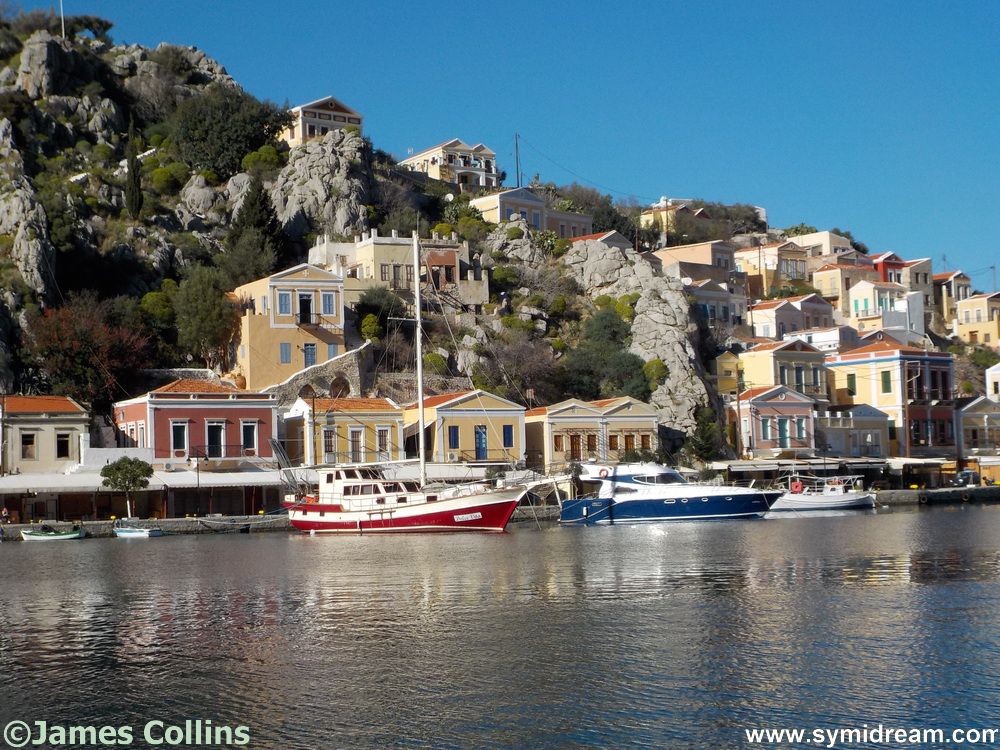
Symi harbour and confiscated trafficking boats
But there are no commas with what are called ‘restrictive terms of identification’, something Symi uses a lot of. As there are so many people called Yiannis, Lefteris and George, for example, locals use nicknames. In fact, I have been told by a Symiot on more than one occasion that this is ‘an island of nicknames.’ You might say Yianni Rainbow, as if that was his surname, but in other cases you might want to say The barman Costas, or Lefteris the truck, in which case, when writing, there is no comma after the name. Got that? Bravo!
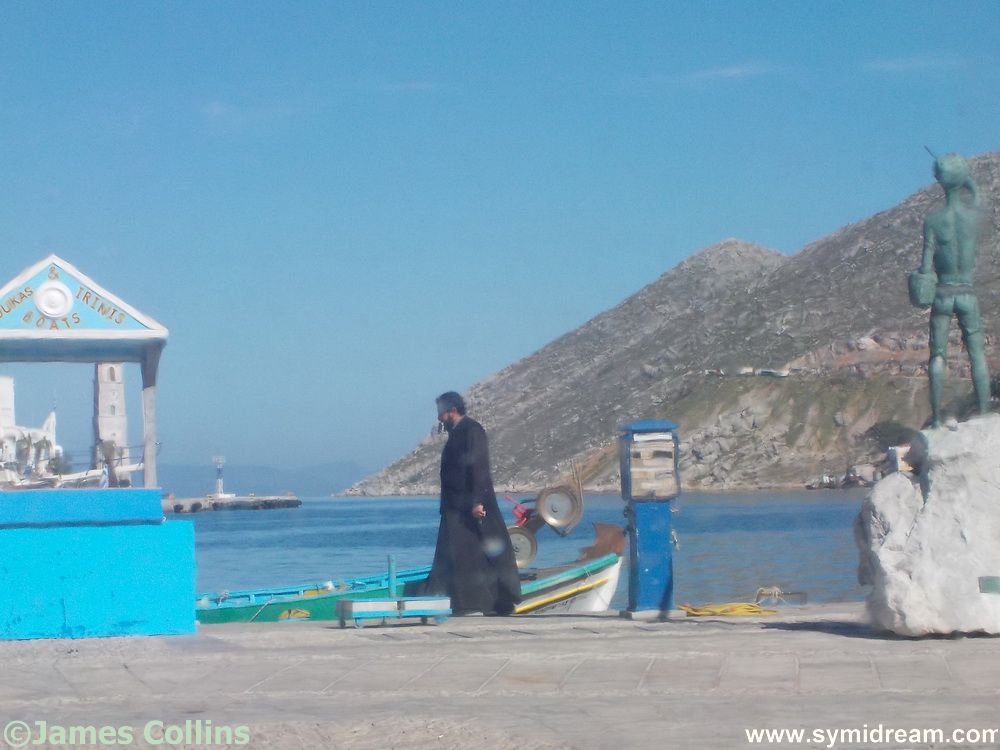
A priest chats to a fisherman (down in his boat), seen through the winter plastic at a kafeneion
That’s’ enough for today, the next section goes on about Nonrestrictive relative clauses, parenthetics, conjunctions and antecedent nouns and I know that I, for one, (‘aside’ commas x 2) am not up to that kind of technicality on a Saturday. So, (optional comma) go and practice your basic use of commas in and out of parenthesis (no comma here as it’s not a list of three or more, though some would always say never put a comma before and or other conjunction) and enjoy your weekend. We have nothing planned apart from a barbecue later today if the weather is up for it, and perhaps a walk on Sunday. (Comma before and there so that it didn’t sound like the weather was up for a walk.) Neil is attending a Solidarity Symi funded first aid course, held with the participation of the local surgeries and Doctors Without Borders. Check the poster for details and, if you are on Symi, (two ‘aside’ commas there), secure a place by phone.
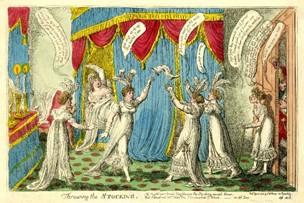
Throwing the stocking
Here, as vaguely promised, is the start of a short story inspired by yesterday’s completely random search for inspiration (see yesterday’s post if you missed it). This is draft one, off the top of the head, with minimal thought or editing. And where the story goes from here is, at the moment, anyone’s guess. I have an idea and I may carry on and complete the story once I have figured out the point, shape and progression of it. But here, interspersed with random images, is the opening ‘set-up’ of a story called ‘Throwing the Stocking.’ It is quite long for a post so bear with it, maybe settle in with a cuppa and, hopefully, enjoy.
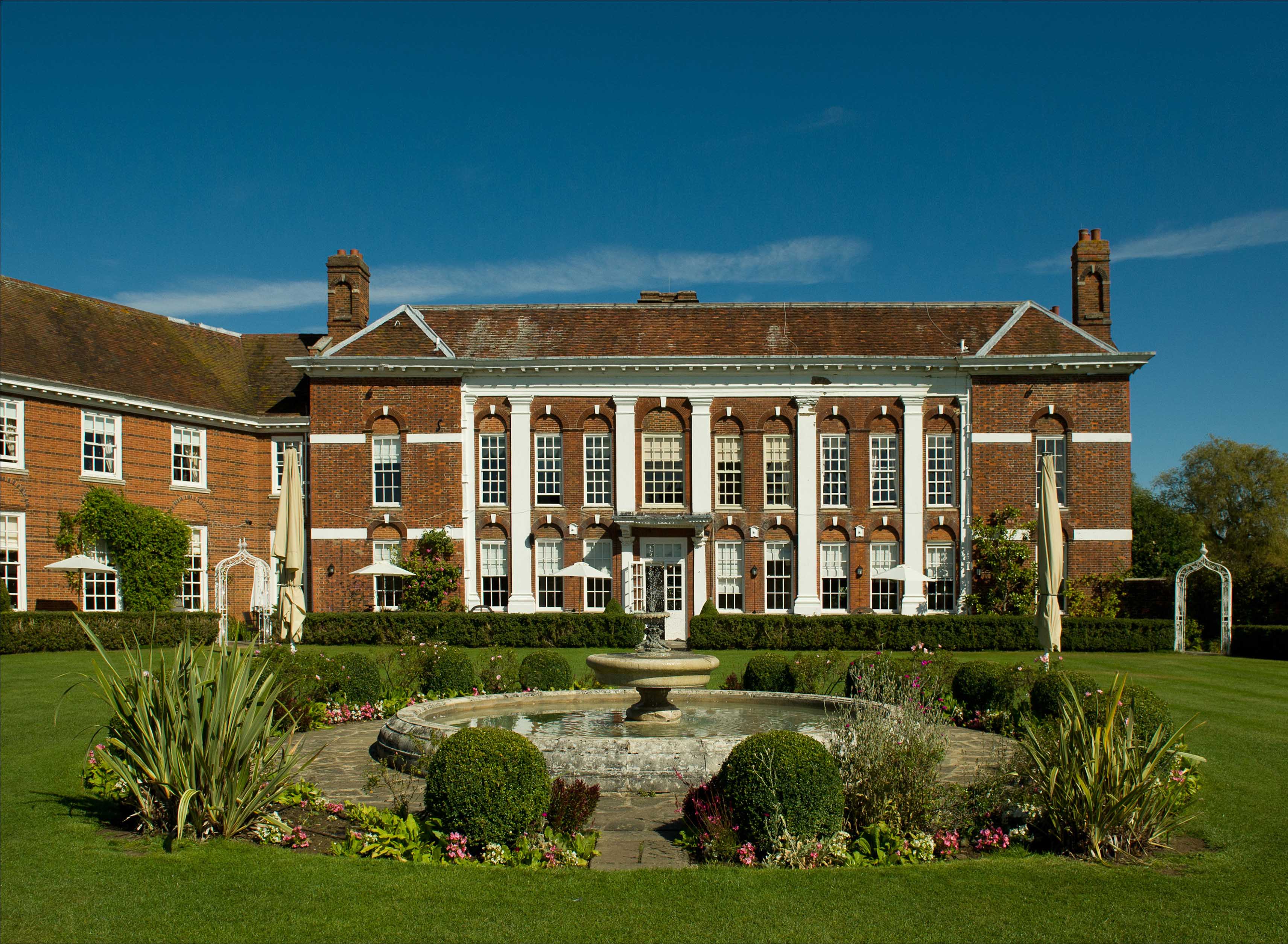
Quendon Hall, Essex. (My six times great grandfather, William Collen, was born in Quendon in the 1690s, but was a wheelwright, rather than a Duke.)
The Duke and Duchess of Quendon were known for their tireless efforts to uphold failing British traditions. The Duke was still the holder of the title of ‘Essex Conker Champion’ and had been since 1793. Now, over thirty years later, the much coveted trophy was still his to show off, remaining undefeated for many more years than any local conker opponent would care to remember. The trophy stood on his ornate drawing room mantelpiece, displayed with all the pride of a first born son, alongside other trophies he and his wife had been awarded for their efforts in mud walking, gravy wrestling and hobby horse droving.
The Essex Conker Champion trophy took the form of a tall, blue-glass vase, crafted with exquisite chestnut tree designs and showed a pair of ornately dressed aristocratic men beneath it, politely playing with their conkers. One was holding up his nut on a lace while the second was having a really good go at it with his own. Only the Duke polished or touched this trophy; even the footmen had to wear gloves just to look at it. It was the talk of every single after dinner conversation that had been held in the room for the last thirty years at least and was only brought out on County Conker Day when the Duke arrived at the autumn fayre to defend his title.
The Duke, shown here as a young man and still only an Earl, prepares for the first round with the aid of his occasionally faithful servant, Ezekiel-Ray.
The day he had first won the trophy and title was as clear in the Duke’s mind today as it had been all those years ago. He had been a boy of eighteen, entering the seniors’ competition for the first time. The event was held on a balmy autumn evening, the same day that ‘The Reign Of Terror’ began in France (quite by coincidence). The ‘Young Earl’, as he had been then, had prepared his large conker meticulously. It was a ten-er even then, heavily vinegar-soaked and shiny, in fact, not unlike the Duke himself, had the vinegar been brandy. With the aid of his valet, the Duke and prepared himself just as meticulously, arriving at the event in his finest, most florid garments in order to impress the daughter of his uncle’s second cousin, the Lady Louisa Labouquet, who he knew loved to watch conkers as much as he loved to play them.
The competition had been fierce, there had been a dispute over shoelace-length and pendulosity and the Earl very nearly lost on a technicality. However, with Lady Louisa’s father, Lord Louis Labouquet, as the judge, the outcome was known even before the preliminary rounds were underway. The Earl’s opponent was disqualified for un-gentlemanly behaviour; having raised the unpalatable suggestion of cheating, the man was horsewhipped for simply saying the word. The judge, it seemed, was more impressed by the young Earl’s inheritance and title than he was with his technique. He was completely overwhelmed by the young man’s generous, some might say extravagant, attentions he had paid to his, let’s face it, rather bovine daughter, Lady Louisa.
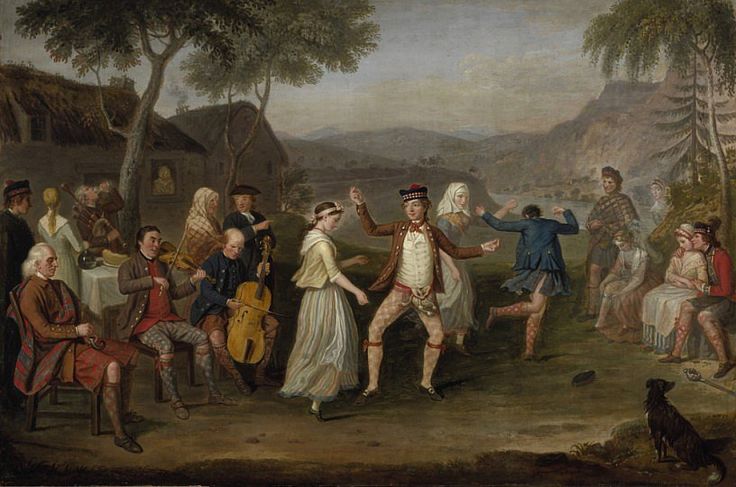
The celebration of the younger Earl’s first win (the Earl and Lady Louisa are not shown in this painting; they were checking his conkers for signs of damage).
On that great day over thirty years ago, the Earl had won not only the ample hand of his beloved in marriage but also the championship; a championship he had won every year since, using the same conker, now at least a forty-er. (There was a rumour that his miraculous conker was actually made of glass or stone. The Athenaeum, in 1808, had first mentioned this possibility; in 1814 the topic was cautiously aired in Lady’s Monthly Museum – Polite repository of amusement and instruction, but the claim was refuted in The Monthly Intelligencer one year later. The actual all-winning conker’s safekeeping place was a closely guarded secret. In fact, only the Duke knew where he kept it and only then on his more lucid days.)
The blue-glass trophy-vase on the Coadestone mantelpiece was, therefore and to say the least, the Duke’s pride and joy.
The Duchess, on the other flabby hand, had two pride and joys. The first was her daughter.
The Lady Sophia had gestated unnoticed in her mother’s womb for the full term. Her presence had been safely protected behind years of indulgence manifest as fatty folds and camouflaged under an adjustable corset, shift and three layers of expansive, unspecified garment that Lady Louisa always wore, even in her retiring chamber. The child arrived quite unexpectedly somewhere between the fish course and a stuffed widgeon at a dinner held to celebrate a visit by the Marquis of Bottom-Whallop in 1805. The Duchess put the sudden pains down to Cook’s stab at a syllabub starter and the embarrassing, not to mention carpet-ruining, gush of ‘waters’ down to the liver powder that ancient Doctor Scrivener had prescribed to her back in 1799. However, there was no easy explanation for what slipped out next. It took two footmen, the butler and two hastily summoned stable lads to manoeuvre the Duchess into the green drawing room. Once there, the gentlemen at the dining table were able to converse without the inconvenience of childbirth and Ivy, a long serving kitchen maid, was called to attend to the Duchess with instructions to bring clothes pegs and scissors. Ivy, who had been busy dressing the widgeon, had already given birth to twelve would-be kitchen maids and porters and knew her way around inter-course birthing. Sophia was finally served to the Duke and Duchess in the green drawing room at ten minutes past the port, a beautiful healthy baby girl.
Despite being born before the gentlemen had lit cigars, Sophia thrived and, as the years went quickly by, became the talk of polite society. Luckily for her she had not inherited her mother’s looks or cravings, remaining slim, divinely pretty and virginal to the very day. It was remarked, in pubic society, that she must have taken after her father. It was also agreed, in less polite private society, that she bore a great resemblance to the Duke’s chauffeur who was also rather slim and divinely pretty, but hardly virginal.
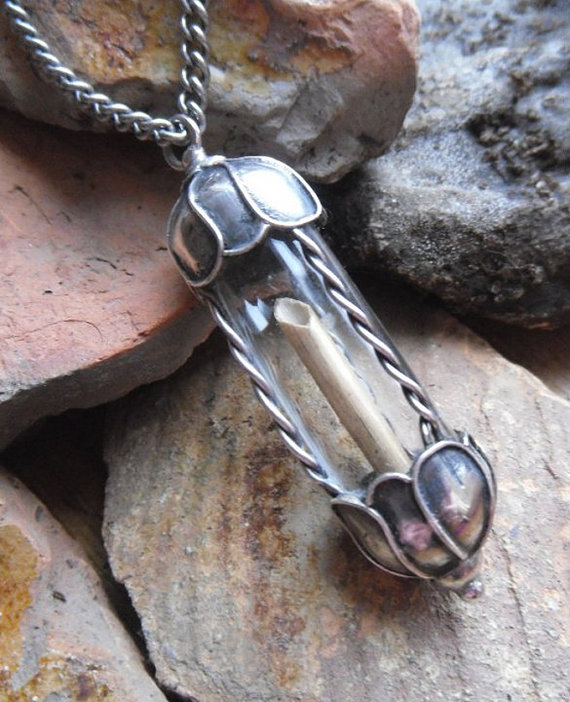
The Duchess’ glass and silver vial, here shown before it came into her possession, holding the remains of the straw that broke the camel’s back.
The Duchess’s second great pride and joy was contained in a small glass vial she always wore around her neck. Sometimes it would be found floundering in her ample bosom, sometimes it clung to the precipice of her cleavage on a silver chain, at other times it was hidden in the folds of majestic though unnecessary garments the Duchess was partial to wearing. She was often seen clutching it while taking a stroll in the manicured grounds, or playing cards with ladies in the yellow morning room, deriving some kind of inspiration for life from its clear, miraculous presence.
The vial was about four inches long, cylindrical in shape, it had silver ends and a silver screw-top with a tiny diamond added later as its centrepiece. It was said to contain the actual tears cried by the Mother of Jesus as she wept at the foot of the cross and it reminded the Duchess every day of their oldest and most fervently upheld traditions; those of the Church. Had she known, of course, that what it actually held was the sweat of the local Abbot, scraped from him by novice teens during his daily steam in his private quarters, she may not have been so fervent about it. Strangely, though, the charmed liquid had helped at least one dinner guest back to their feet after a particularly tricky run-in with a halibut and so the Duchess swore by it.
The Duke and Duchess were traditionalist of the highest order, so when it came to the marriage of the unexpected and beautiful Sophia, their only daughter, there was no question about it: all traditions must be adhered to and all had their place. As the wedding day approached and everything was made ready, the Duke rounded up a group of the most handsome local squires and first-borns and invited them to the very old and traditional event known as ‘Throwing the Stocking.’ In their defence, a lot of the first-borns had no idea about this ceremony, as none of them were old enough to be married yet and secondly because they had never been to a wedding where the bride’s stocking was removed, let alone thrown. In this day and age it was more common for the garter to be thrown and, in some very avant garde households, even a bouquet of flowers. The stocking-throwing was an older tradition even than the garter-throw and many friends of the groom had been keen to see how it was played out. They were also, some suspected, quite keen to grab a feel of a lady’s hose in order to offer them a little preparation for married life.
A rare record of an actual ‘Throwing the stocking’ wedding tradition (female version). Apologies for the small size of the image.
Thus, on this glorious day in June, the Duke stood at his mantelpiece beside his pride and joy blue-glass vase and addressed the cavalcade of well-dressed, though slightly bemused, younger men, all friends of Sophia’s intended, all from the county and all rather keen to get their hands on a lady’s stocking in some legal fashion.
How to write a story (1. Inspiration)
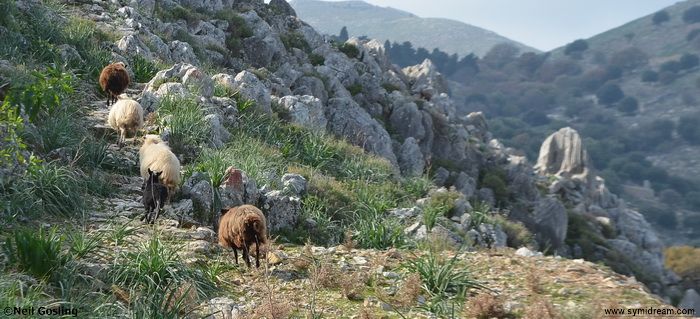
Back from yesterday’s lightning strike with some more of Neil’s photos taken in the hills the other day. These show some of the local animals and Symi views.
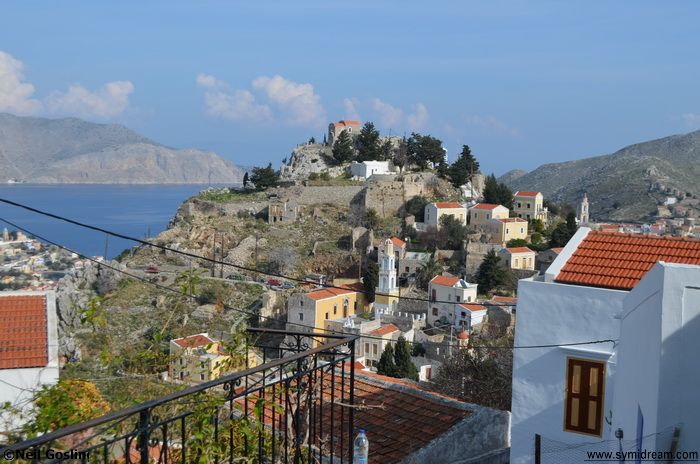
Classic castro view
I, meanwhile, am going to share an inspiration tip with you. This doesn’t work for everyone, but it can be fun to try. When you’re thinking that you want to write a story but have no idea where to start, head to your bookshelf (or someone else’s if you don’t have one) and come up with a set of numbers. These need to relate to what you have available, example: I have six shelves on my bookcase but the bottom one is filled with music, so that’s not going to work. So, I pick a number between one and five to get the shelf, then a number between one and about 20, the number of books per shelf, then a number between one and whatever the last page number is, then a number between one and say 30, to get a line. Then I’ll take the first sentence on that line, of the next full sentence along if there isn’t one and use that as the basis for my story. I’ll try it now:
This is a well photographed tree
Shelves: 5, choose 3 (down from the top, it’s up to you which way to go), books, 20, so I choose 13 in from the left. I came to ‘The Ingoldsby Legends’, a book from 1882, written by Thomas Ingoldsby (Esquire) and printed by Richard Bentley and Son, Publishers in ordinary to her Majesty the Queen. (I have some odd books on shelf three.) The Ingoldsby Legends is a collection of myths, legends, ghost stories and poetry written supposedly by Thomas Ingoldsby of Tappington Manor, actually a pen-name of an English clergyman named Richard Harris Barham. The book has 417 pages, so I have chosen page 262 because I have a 200 Koruna note on the desk from Prague and also a phone bill stating 62. I have the page, but which line?
Always look for the details
Page 262 is part of a long poem titled ‘The Wedding Day’ and each page here has about 50 lines as it’s a small-print book. I’m going to choose line 16, as I can see the end of the date on the phone bill and it says 16. The line starts with a sentence that runs for two lines and so here, quite by chance is the inspiration for a story. I quote from the goodly Mr Ingoldsby (Esq.): “To dance at her bridal, and help ‘throw the stocking’, a practice that’s now discontinued as shocking.”
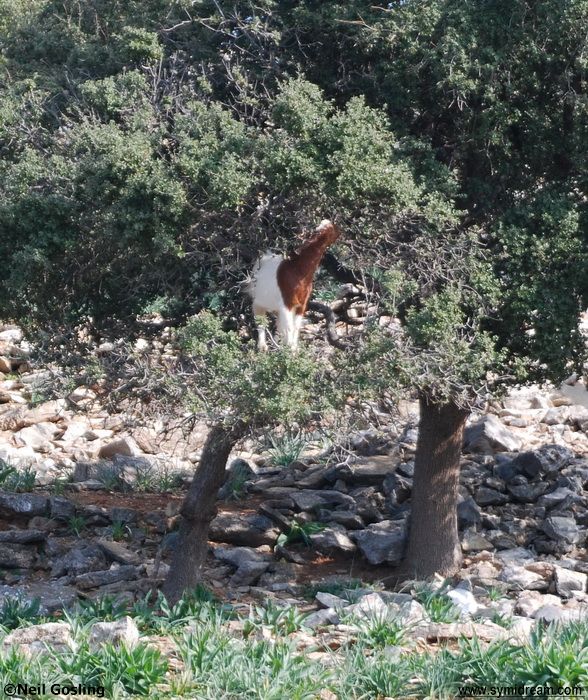
Such as a goat in a tree
This immediately suggests a rhythm but I don’t want to get drawn into a metered poetry style or a lyric, so I have to concentrate on the action and keywords of the sentence. Dancing, throwing the stocking, discontinued. That’s enough to give me a background and a feel, in this case humour. The throwing of the stocking seems to have led to something of a social gaff and the practice, at weddings, has been stopped. So, if that doesn’t give you a good, meaty ‘inciting incident’ as they like to call it in films, then I don’t know what will.
Rural Symi, a place of inspiration
And to the story. Did I come up with one? Well, no, not yet but if you look on these pages tomorrow or next week, I may well put something up. There will, of course be images of Symi which may or may not fit with the story I have yet to write, but then this blog is about a writer living on a Greek island, so you have to expect a bit of both.
Amazon’s indie book standards
It looks like book readers are now going to have the chance to whistle-blow bad layouts, editing and writing. “Beginning February 03, 2016, Amazon will start posting a little message on all Kindle books not up to snuff. Doesn’t matter if the book is by an indie author, small press, online publisher or boutique publisher. But this will most assuredly affect indie authors the most.” [See full article here.]
I agree with this policy, actually, even though Amazon will hold your book back so you can’t sell any more of them, until any issues raised are resolved.
Today’s photos are from Neil and were taken on a walk to Panormitis
Since publication of ‘Village View’ and ‘The Judas Inheritance’ my stories have gone through a process of ‘beta’ readers who check for spelling, punctuation, typos, style conflicts and general readability and sense-making of the stories before being handed to my editor who not only re-reads and checks, but also sees to consistency of format and style, and deals with the layout. RC Publications, the small indie publisher I work with, has its own in-house style and approach so the design of my recent books is now consistent.
On the far side of the island
However, my older books, including my bestseller ‘Symi 85600’and the follow up ‘Carry on up the Kali Strata’, were laid out by me, as were the early novels which also suffer from a lack of detailed editing (a bit like my blog posts). So, if I should start to suffer one- or two-star reviews on Amazon, I have agreed with RC Publications that we will reformat them and bring them up to the layout standards of my newer books. So far though, all my reviews on Amazon have been five- or four-star (as far as I remember), so I am not anticipating that this new Amazon policy will affect me. I hope.
The old Kalderimi, the ‘donkey path’
This move towards perfection, which can’t be a bad thing, reminds me of what Neil has been saying for a couple of years now re: wedding photography. Everyone can now take photos on their digital cams and tablets etc. without having to understand the post production process, but really you need to have a professional to do it right, on decent equipment. Neil (and other photographers he knows) feel there will be a backlash in a year or so as more and more people will realise that ‘Uncle Fred’ may have a posh camera but he can’t use it and the wedding snaps were dreadful. ‘Should have got a professional in.’
Towards Stavros Tou Pollemou
Which brings me on to the question of covers. RC Publications are looking for a cover designer who doesn’t charge an arm and a leg. I’ve always ‘had a go’ at my own covers, or had a friend design them, but I am no designer and I’ve always felt that the books suffer from amateurish looking covers. Maybe I am being hard on myself, but I don’t think so. If anyone fancies working with me on designs and doesn’t want to charge me the rate they deserve (‘cos I can’t afford it and neither can RC at the moment) then I’d love to hear from you. I am, at the moment, working on several writing projects (winter is a fertile time for my imagination) so I could probably do with a cover or two in the next few months. I’ve always been keen on giving young people and ‘newbies’ a chance to get a good CV entry (our theatre company used to work with both amateurs and professionals in order to give the amateurs who wanted a chance to work with the pros just that chance) so students, anyone new to the book cover scene, or simply anyone who knows what they are doing would be more than welcome to come aboard. As long as we like the work, of course. The contact email is at the bottom of this site.
Autumn olive grove
I’ll leave you thinking about that while you head off and enjoy your weekend – we have very little planned here on Symi this weekend though I am aware that I currently have four books on the go: one in editing mode, one with 25% of the first draft done, another with about the same (the Saddling), one that is simply notes and research with a rough outline and one that I started yesterday which is an exercise more than anything else. So, perhaps a weekend of writing is in order so I can work on something that is up to Amazon’s new indie book standard standards.
The memorial to murdered resistance workers WWII half way across the island
The fiction farm
A busy day at the fiction farm yesterday. We’ve started to put the first chapter of ‘Straight Swap’ into the layout and editing process. It’s all about font size and gutters, margins and layout for the moment. We arrange the chapters in a template that the editor makes up in a thing called In Design, but we need to decide on that template first.
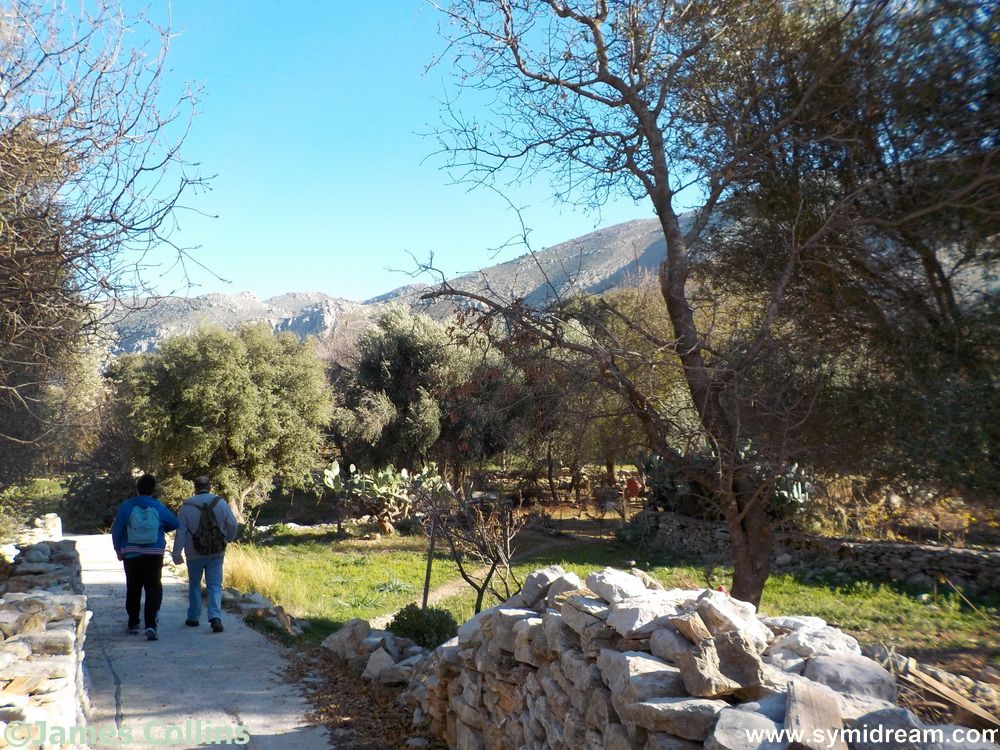
A walk in the sun
We’re going with the same size and layout at ‘Lonely House’ and ‘The Judas Inheritance’ as this next one is also being published via RC Publications, so it’s a ‘house’ style thing. We’ve dropped the font size down to 12 from 14, as it was for the others, because ‘Straight Swap’ is around 120,000 words in length and I want to keep the number of pages down. The more pages, the more it costs to print a copy, but it is still easy enough to read. When we finally get the Kindle version out you will be able to select your own font size, so that’s not an issue.
I’ve seen the first chapter layout, though nothing has been edited yet, and it looks fine. A bold heading, the quote – each chapter starts with a quote – and then the main text in a standard way. All I need do now is make any last edits and send each chapter up as a separate file. Meanwhile, I’ve been doing the Donkey work on ‘Donkeys.’ The story, for those who don’t know it:
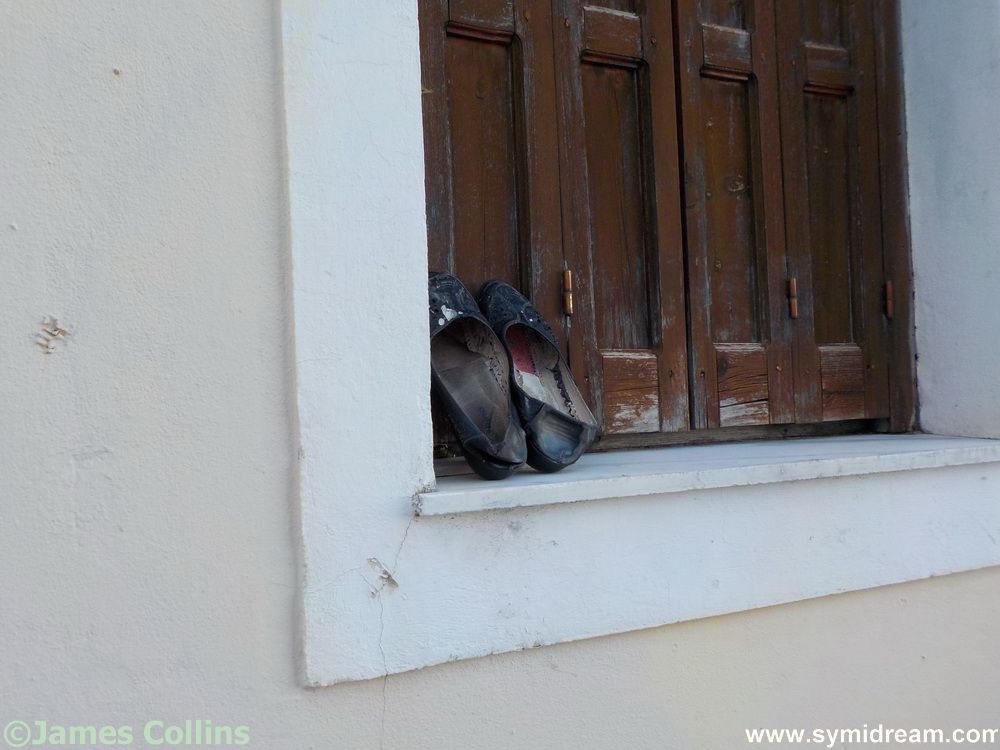
Some shoes on a ledge
A few years ago two of us set about wringing a screenplay about the first gay marriage in Greece. (Imaginary, in our case, though there was a ceremony carried out on Tilos several years ago now.) Even civil partnerships were illegal then, and they are only now just coming into being, or were about to just before Christmas, I’m not sure where the legislation is right now. The script caught the attention of a South African producer who found a director and started looking into funding but, as is the case in 99% of film projects, no funds were forthcoming, despite alleged interest from some ‘names’ and Elton John. The script hung around on the professional script-selling sites for a while and the moment passed. But during all the time it’s sat there, people have been urging me to write the novel version and that’s what I’ve started doing.
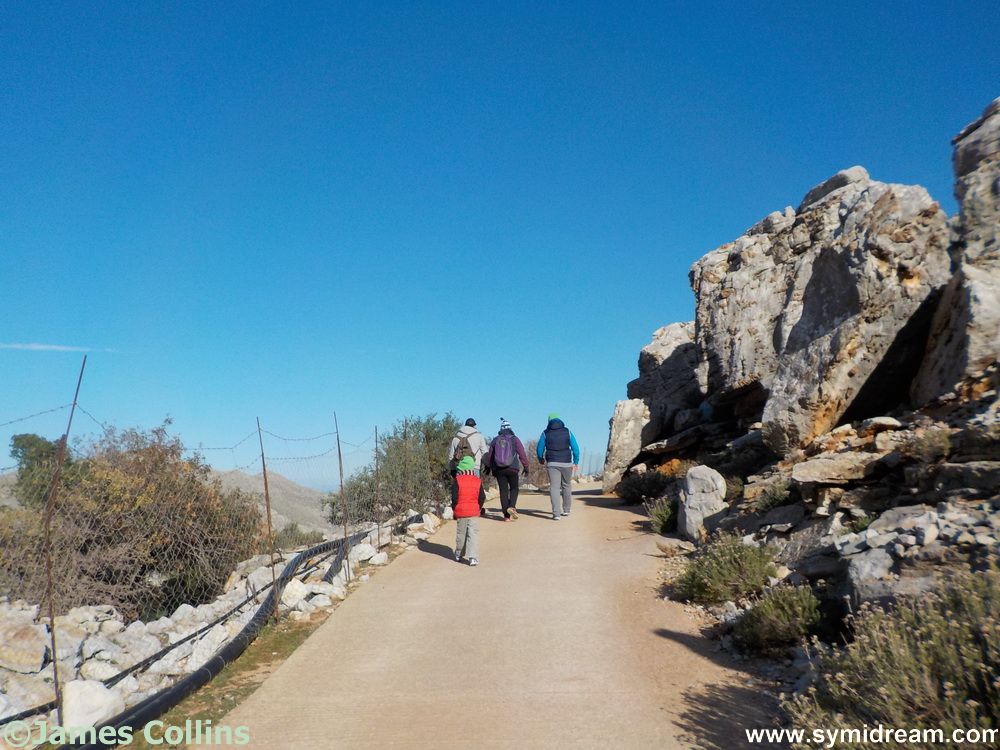
More walking in the sun
Only this isn’t your average novel, it’s very fast, the points of view change constantly and there is minimal lengthy backstory. It’s a story written from a screenplay, literally; I’ve copied the text and dialogue across and am basically filling out the gaps and allowing myself a little space to expand on things, which a film script doesn’t give you space or time for. So it’s not going to be my usual style, but it is coming on.
And sometimes under the cloud
And that’s what I have been doing these past few days as the festivities of Christmas slowly fade and bit by bit one returns to the usual routine. Up until yesterday I was still in sofa mode, settling in in the late afternoon with some films, while the wind battered the shutters and the sea swelled, while the cat made vain attempts to sit on my head and puncture my anatomy and the Christmas lights taken from the tree lit up the hall windowsill and I made my way through the last of the chocolates, blue cheese and other goodies which lose some of their sparkle and attractiveness by January 7th onwards. Back to the working grind and back to the quiet winter on Symi.
View from the Castro, you can see Taverna Zoi’s roof terrace and the roof of the new hospital